

Traveler Guitar Guitar: Ultimate Guide Before Buying
If you love music but hate carrying around a bulky guitar, the Traveler Guitar Guitar could be your perfect companion. Designed for musicians on the go, these compact guitars combine portability with impressive sound quality, making them ideal for travel, commuting, or simply practicing without taking up a ton of space. Whether you’re a seasoned performer, a casual hobbyist, or a student, understanding everything about Traveler Guitar Guitars can help you make the right choice before investing in one. In this ultimate guide, we’ll explore their features, types, pros and cons, buying tips, and comparisons with other travel guitars to ensure you pick the perfect instrument for your needs.
What is a Traveler Guitar Guitar?
A Traveler Guitar Guitar is more than just a scaled-down version of a regular guitar—it’s a fully functional instrument designed with mobility and convenience in mind. Unlike traditional guitars, which can be heavy, awkward to carry, or difficult to fit into tight spaces, Traveler Guitars are engineered to be lightweight, compact, and travel-friendly.
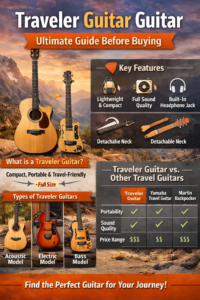
The brand Traveler Guitar was founded with a simple goal: to allow musicians to play their favorite instruments anywhere without compromising on tone or playability. Over the years, the company has developed a reputation for innovation, producing guitars with detachable necks, built-in electronics, and durable materials that withstand frequent travel.
These guitars come in both acoustic and electric models, offering full-scale sound while fitting into carry-on bags or small cases. For many travelers, the Traveler Guitar Guitar is more than a convenience, it’s an instrument that allows them to practice, record, or perform anywhere without sacrificing quality.
Key Features of Traveler Guitar Guitars
When evaluating a Traveler Guitar Guitar, several key features set them apart from standard guitars and even other travel guitars. Understanding these aspects will help you determine which model is right for you.
Size and Portability
Perhaps the most obvious advantage of a Traveler Guitar Guitar is its compact size. Most models are significantly smaller than full-sized guitars, yet they maintain a comfortable neck length and fret spacing. This makes them easy to store in airplane overhead compartments, car trunks, or even backpacks. Despite their smaller body, these guitars often deliver a surprisingly rich sound, thanks to thoughtful design and precise engineering.
Build Quality and Materials
Traveler Guitars are built with high-quality tonewoods and durable hardware to ensure longevity. Neck materials often include maple or mahogany, while fretboards are typically rosewood or ebony. Even the smallest components, like tuning pegs and bridge pins, are designed to withstand the rigors of travel. Many musicians report that their Traveler Guitar Guitars maintain tuning stability far better than other compact instruments, which is crucial for consistent performance on the road.
Sound and Tone Options
One of the biggest concerns for a travel guitar is sound quality. Traveler Guitar Guitars come in both acoustic and electric versions, each delivering full, resonant tones despite their size. Acoustic models often include chambered bodies to amplify sound naturally, while electric versions feature built-in pickups and preamps for stage-ready performance. Some hybrid models even offer headphone jacks for silent practice, making them ideal for hotel rooms or late-night sessions.
Additional Features
Beyond the basics, many Traveler Guitar Guitars include features designed to enhance convenience and functionality:
- Detachable necks for ultra-compact storage.
- Built-in electronics for amplification without external gear.
- Headphone outputs for private practice.
- Lightweight yet durable cases for easy transport.
These thoughtful additions make Traveler Guitars ideal for musicians who value convenience without sacrificing quality.
Types of Traveler Guitar Guitars
Traveler Guitar offers a range of models designed to fit different playing styles and musical needs. Understanding the differences can help you choose the right one.
Acoustic Traveler Guitars
Acoustic Traveler Guitars are perfect for those who enjoy the natural, resonant sound of an unplugged instrument. They are lightweight, easy to carry, and often feature built-in electronics for amplification when needed. These models are ideal for casual gigs, camping trips, or songwriting sessions on the go.
Electric Traveler Guitars
For musicians who want to perform on stage or record in a studio, electric Traveler Guitars offer compact convenience without compromising tone. These models include built-in pickups and preamps, allowing them to connect directly to amplifiers or recording interfaces. Many electric Traveler Guitars are designed with detachable necks, making them ultra-portable for tours or commuting musicians.
Bass Traveler Guitars
Though less common, Traveler also produces bass guitars for traveling bassists. These models maintain proper scale length and string spacing while being small enough to carry conveniently. They’re ideal for musicians who need a portable option without giving up a full-range bass sound.
| Type | Size/Portability | Best Use | Price Range | Pros | Cons |
| Acoustic | Compact, light | Casual play, practice | $350 – $600 | Natural sound, portable | Less projection than full-size |
| Electric | Compact, mid-weight | Stage, recording | $500 – $1,000 | Full tone, built-in electronics | Slightly different feel |
| Bass | Compact, light | Travel, small gigs | $600 – $1,200 | Portability, full bass sound | Limited model options |
Pros and Cons of Traveler Guitar Guitars
No guitar is perfect, and the Traveler Guitar Guitar is no exception. Knowing the advantages and potential drawbacks can help you make a well-informed decision.
Pros
- Portability: Lightweight and compact, easy to carry anywhere.
- Durability: High-quality materials designed for travel.
- Practice-Friendly: Headphone outputs and detachable necks make practice convenient.
- Full Sound: Despite size, they deliver rich, resonant tones.
- Variety: Available in acoustic, electric, and bass models.
Cons
- Different Feel: Smaller body and neck may feel unusual initially.
- Tone Variation: Acoustic projection can be slightly lower than full-sized guitars.
- Price: Some models are more expensive than beginner travel guitars.
Many musicians who own Traveler Guitar Guitars emphasize that the pros far outweigh the cons, especially if portability and convenience are top priorities.
How to Choose the Right Traveler Guitar Guitar
Choosing the right Traveler Guitar Guitar involves more than picking the first model you see. Consider these factors carefully:
Consider Your Playing Style
Are you an acoustic strummer, an electric shredder, or a bassist? Matching the guitar type to your style ensures you get a model that fits your needs. Acoustic models are great for songwriting and casual gigs, while electric models excel in performance and recording environments.
Budget and Price Range
Traveler Guitars range from budget-friendly options to high-end professional models. While it’s tempting to choose the cheapest option, investing in quality can save frustration later. A mid-range model often provides the best balance of sound, durability, and portability.
Build and Comfort
Weight, neck thickness, and body shape all impact comfort during play. If you plan on long practice sessions or frequent performances, ensure the guitar feels natural in your hands. Trying it in person, if possible, is ideal.
Reviews and Reputation
Checking reviews from verified buyers and musician forums helps you avoid low-quality models or design flaws. Look for feedback on durability, sound, and tuning stability, as these are critical factors for traveling musicians.
Step-by-Step Checklist:
- Decide between acoustic, electric, or bass.
- Set a budget range.
- Check neck comfort and weight.
- Read multiple reviews.
- Ensure portability features meet your travel needs.
Traveler Guitar Guitar vs. Other Travel Guitars
Traveler Guitar often outshines other travel guitars from brands like Yamaha or Martin.
| Brand | Size | Sound Quality | Durability | Price Range |
| Traveler Guitar | Ultra-compact | Excellent for size | High, travel-ready | $350-$1,200 |
| Yamaha Travel | Small | Good, less projection | Medium | $200-$700 |
| Martin Backpack | Medium | Excellent | Medium-High | $500-$1,000 |
Traveler Guitars consistently rank top because they balance portability, durability, and tone better than most competitors, especially for serious musicians.
Tips for Maintaining Your Traveler Guitar Guitar
To ensure longevity, follow these tips:
- Cleaning: Wipe down after every session to remove sweat and dirt.
- Storage: Use the included hard case or padded gig bag.
- Tuning: Check tuning stability frequently, especially when traveling through different climates.
- Electronics Care: For electric models, avoid moisture near preamps or headphone jacks.
- Regular Inspection: Check screws, nuts, and tuning pegs for tightness.
Proper care ensures your Traveler Guitar Guitar continues to perform at its best no matter where you take it.
Frequently Asked Questions (FAQs)
Q: Is a Traveler Guitar Guitar good for beginners?
A: Absolutely. Its lightweight design and compact size make it easy to handle for beginners. Electric or acoustic options can cater to different learning styles.
Q: Can I use a Traveler Guitar Guitar on stage?
A: Yes. Electric models, in particular, have built-in pickups and preamps that allow for full performance without sacrificing tone.
Q: How durable is it for frequent travel?
A: Traveler Guitars are designed specifically for durability and portability. Many musicians report years of reliable use.
Q: Do they make both electric and acoustic versions?
A: Yes. Traveler offers a range of acoustic, electric, and even bass guitars to suit different preferences and playing styles.
Conclusion
The Traveler Guitar Guitar is a revolutionary option for musicians who need mobility without compromising on quality. Whether you’re commuting, touring, or simply want a convenient practice option, these guitars deliver durability, full sound, and incredible portability. By understanding the features, types, and key considerations outlined in this guide, you can confidently choose the Traveler Guitar Guitar that fits your lifestyle and playing style. Explore the latest models today and find your ultimate travel companion for music wherever life takes you.