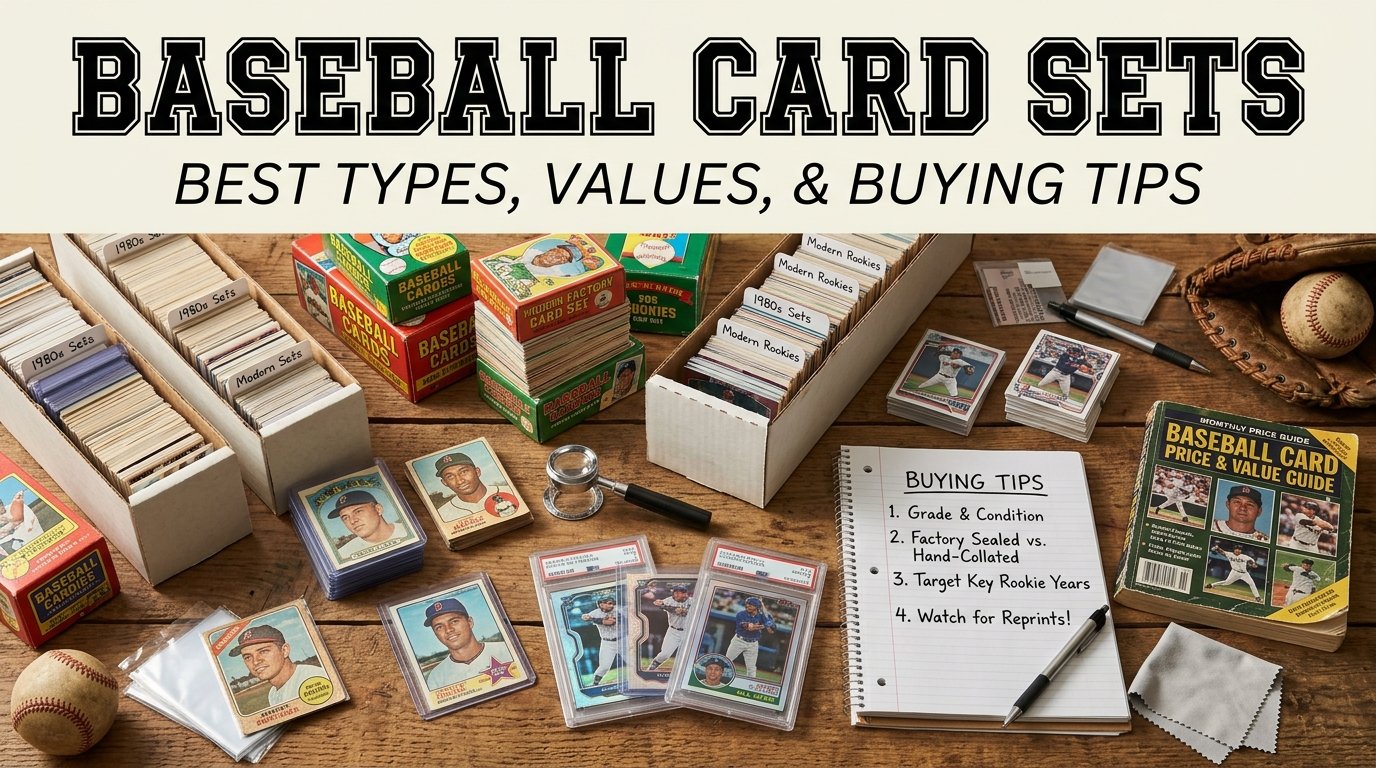
Baseball Card Sets: Best Types, Values, and Buying Tips

Baseball card sets give collectors a way to collect players, teams, and seasons in an organized format. Some people buy complete sets to keep their collections together. Others look for older sets that include famous players or rare cards. The right set depends on your budget, interests, and reason for collecting.
Not every baseball card set is worth a high price. A set from several decades ago may have limited demand, while a newer set with popular rookie cards may attract more buyers. Condition, completeness, print runs, and the players included can all affect value. These details matter whether you are buying your first set or sorting through cards you already own.
This guide explains the main types of baseball card sets, popular brands, sets by year, and the factors that affect prices. It also covers how to identify a set, check its value, complete missing cards, and store your collection safely.
What Are Baseball Card Sets?
A baseball card set is a group of cards released as part of the same collection. Most sets share a manufacturer, release year, design, and checklist. A checklist is a list of the cards included in that release. It helps collectors identify which cards belong to a set and determine whether their collection is complete.
Some sets include hundreds of cards featuring players from across Major League Baseball. Others focus on one team, a specific group of players, rookies, or a special theme. Sets may be sold as individual packs, loose cards, complete collections, or factory-sealed boxes.
A complete set contains every card listed on its checklist. A partial set has one or more missing cards. A factory-sealed set remains unopened in its original packaging, although the exact contents depend on the product. These differences can affect how collectors buy, store, and value their cards.
People collect baseball card sets for different reasons. Some want a record of a particular season, while others enjoy finding their favorite players. Collectors interested in resale value may focus on rookie cards, older releases, limited products, and sets with strong demand.
Types of Baseball Card Sets
Baseball card sets come in several forms. Knowing these types can help you choose a collection that fits your goals.
Complete Baseball Card Sets
A complete baseball card set includes every card from a particular release. For example, if a set’s checklist lists 700 cards, a complete collection should contain all 700. The exact number varies by year and product.
Collectors often prefer complete sets because they keep a release organized. They can also be easier to sell as a single collection than hundreds of unrelated cards. However, a complete set is not automatically worth more than the total value of its best individual cards.
Before buying a complete set, check its checklist and condition. Look for missing cards, duplicates that replace missing numbers, damaged corners, stains, and surface marks. If the seller claims the set is complete, ask how it was checked.
Factory-Sealed Baseball Card Sets
Factory-sealed sets remain in their original packaging. Collectors may prefer them because the cards have not been handled individually since packaging. Sealed packaging can also make a set more appealing to buyers who want an unopened product.
However, sealed does not always mean valuable. A set with a large production run and limited collector demand may sell for a modest price even when unopened. Packaging damage, moisture exposure, and uncertainty about whether the product is original can also affect buyer confidence.
When buying a sealed set, examine the packaging carefully. Check for tears, unusual resealing, crushed corners, discoloration, or signs of water damage. Compare the product’s design and packaging with reliable examples from the same release.
Vintage Baseball Card Sets
Vintage baseball card sets attract collectors interested in older players, historic seasons, and early card designs. Depending on the collector and the era, the term vintage may refer to different periods, so it is best to identify the exact year and manufacturer rather than relying on the label alone.
Older sets can include cards of Hall of Fame players and other historically important figures. Their value depends on the specific release, card condition, scarcity, and demand. A complete vintage set may be difficult to assemble if key cards are rare or expensive.
Condition is especially important for older cards. Rounded corners, creases, paper loss, stains, and fading can lower prices. Some collectors still buy worn sets for historical interest or affordability, but they should not expect every vintage collection to command a premium.
Modern Baseball Card Sets
Modern baseball card sets include recent releases with current players, rookies, inserts, and different card designs. Depending on the product, a release may include base cards, parallel versions, autographs, memorabilia cards, or short-printed cards.
Modern sets appeal to new collectors because they are easier to find than many older releases. Buyers can choose between inexpensive base sets and premium products that cost much more. Some focus on the full checklist, while others collect only selected players or special cards.
Modern cards can rise in value when a player becomes a star or a rookie develops into an important player. Prices can also fall if interest fades or more copies become available. Buying a modern set should begin with a clear collecting goal rather than an assumption that it will increase in value.
Team Baseball Card Sets
Team sets contain cards of players from a specific baseball team. They are a good option for fans who want to collect their favorite club without buying every card from a full release.
A team set may include current players, stars, rookies, or a selection of cards from a particular season. Some are sold as packaged collections, while others are assembled by collectors. The exact contents depend on the release.
Team sets are often more affordable than full sets, but prices vary. A team with popular players or sought-after rookies may attract more interest. Before purchasing, confirm which players and card numbers are included.
Minor League and Specialty Sets
Minor league sets feature players before or during their development in professional baseball. Collectors sometimes buy these cards to follow prospects and look for early cards of players who later reach the major leagues.
Specialty sets focus on a particular theme, team, event, or type of card. Some may feature retired players, historical moments, or limited promotional releases. Their appeal depends on the subject and the number of collectors interested in it.
These sets can be enjoyable for collectors with specific interests. However, prospect cards carry uncertainty because not every young player becomes a major star. Buy them because you like the players or the collection, not only because you expect future price increases.
Comparison Table: Types of Baseball Card Sets
| Set type | Best for | Main benefit | What to check |
|---|---|---|---|
| Complete set | Collectors who want an entire release | Keeps a season or release together | Checklist, missing cards, condition |
| Factory-sealed set | Buyers who prefer unopened products | Original packaging remains intact | Seal, packaging condition, authenticity |
| Vintage set | Collectors interested in older cards | Historical players and designs | Year, key cards, wear, demand |
| Modern set | New and active collectors | Access to current players and rookies | Product type, checklist, print run |
| Team set | Fans of a particular club | Focused collection at a potentially lower cost | Included players and card numbers |
| Minor league set | Prospect collectors | Tracks players early in their careers | Player demand and uncertainty |
| Specialty set | Collectors with a specific interest | Focus on a theme or limited release | Release details and collector demand |
Popular Baseball Card Brands and Their History
Different manufacturers have released baseball cards across many decades. Each brand has its own designs, product types, and collector following. Knowing the manufacturer can help you identify a set and find the correct checklist.
Topps Baseball Card Sets
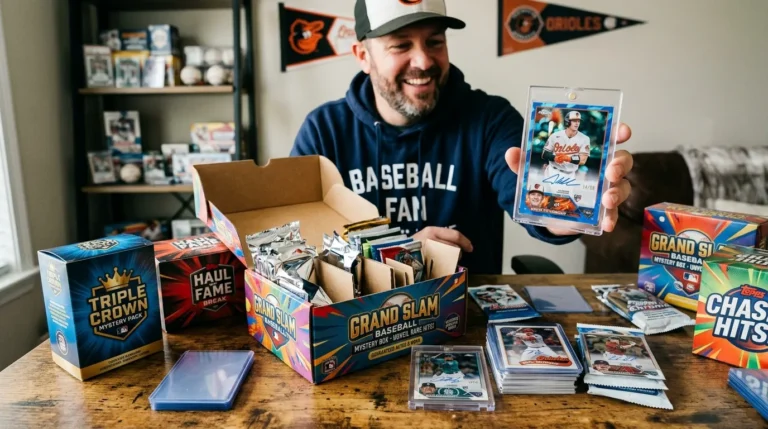
Topps is one of the best-known names in baseball cards. Its releases include traditional base sets, special products, rookie cards, inserts, and other collections. Many collectors organize their cards by Topps release year.
The design changes from year to year, so the card borders, logos, fonts, and photographs can help identify a release. Still, visual clues alone may not be enough. Check the copyright line, card number, manufacturer information, and other details printed on the card.
Topps sets range from affordable modern collections to older releases that may include highly sought-after cards. The value of a set depends on its contents and condition, not simply the brand name.
Bowman Baseball Card Sets
Bowman is closely associated with prospect and rookie collecting. Many collectors look for cards of young players who may become leading major league stars. This makes Bowman releases popular among people who follow prospects.
Some Bowman products contain base cards, prospect cards, autograph cards, and other variations. The contents depend on the specific product. A standard set and a premium product from the same brand may have very different prices and collector demand.
Prospect collecting involves uncertainty. A player may develop into a star, remain an average player, or never establish a long major league career. Research the exact card and player before paying a premium.
Donruss and Other Baseball Card Brands
Donruss is another familiar name in baseball card collecting. Its releases have included distinctive designs and player-focused sets. Other manufacturers have also produced cards that appeal to collectors because of their photography, player selection, inserts, or place in baseball card history.
When comparing brands, look beyond the logo. Check the year, release name, card checklist, condition, and key players. Two sets from the same manufacturer can have very different demand.
Collectors should also distinguish between a standard base set and a premium product. Special inserts, autograph cards, memorabilia cards, and parallel versions may not be included in the regular checklist. Confirm what the product contains before comparing prices.
Baseball Card Sets by Year
The year of a set is one of the first details to establish when researching it. It helps you find the right checklist, compare similar products, and identify the cards included in the release.
Baseball Card Sets From the 1980s
Baseball card sets from the 1980s remain popular with collectors who remember buying cards during that period. Many releases are also available in complete or near-complete form. This can make them a practical choice for collectors who want to build a collection without searching for every card individually.
However, age alone does not make a set expensive. Many cards from this period were produced in large quantities. Sets with common cards may have modest prices, even when complete and well kept.
Look for the exact release and check whether it includes sought-after rookie cards or other cards with strong demand. Condition matters, especially for cards with sharp corners and clean surfaces. A damaged set may be worth less than a comparable collection in better shape.
Baseball Card Sets From the 1990s
The 1990s brought many different baseball card products, designs, and special releases. Some collectors enjoy the period because of its colorful designs and the players who became stars during those years.
A common mistake is assuming that all 1990s cards are rare. Many products were printed in large quantities, which can keep prices low. Even a complete set may not be worth much if few buyers are looking for it.
Some cards from this decade can still attract attention because of player demand, scarcity, condition, or special features. Identify the exact release before making a price estimate. Do not treat every card from the decade as equally valuable.
Baseball Card Sets From 2000 to Recent Years
Sets released from 2000 onward include a broad mix of base cards, rookie-focused products, inserts, autographs, and memorabilia cards. Modern production methods also give collectors more product choices at different price levels.
Some buyers prefer complete base sets because they are easy to organize. Others focus on rookies or special cards that have a smaller print run. These approaches require different budgets and research.
If you are collecting sets from this period, check the release checklist and product type. The same player may have several cards from the same year, each with a different design or scarcity level. A player’s name alone is not enough to determine value.
Baseball Card Sets From 2024, 2025, and 2026
Recent releases can interest collectors who follow active players and new rookies. Sets from 2024, 2025, and 2026 may include different base checklists, special inserts, and product variations depending on the manufacturer.
Newer sets are usually easier to find than older releases, but availability does not guarantee future demand. Prices may change as players perform, rookies develop, and collectors shift their attention. Some cards may rise sharply, while others may lose interest over time.
Before buying a current-year set, decide whether you want the complete checklist, a team collection, rookie cards, or special inserts. Compare the cost of a complete set with the cost of building one from individual cards. Choose the option that fits your budget and collecting plans.
Which Baseball Card Sets Are Worth Money?
Some baseball card sets sell for much more than others, but there is no single price that applies to every collection. The release year, manufacturer, key cards, condition, scarcity, and buyer demand all play a part.
A set containing important rookie cards may attract more interest than a set filled with common cards. An older release may be desirable because of its historical importance, but age alone is not enough. A modern set can also be expensive when it includes cards that collectors strongly want.
It is important to separate the value of a complete set from the value of individual cards inside it. A collection may contain one or two high-demand cards while most of the remaining cards have low resale prices. In other cases, collectors may pay a premium for a complete set because they want every card from that release.
What Affects Baseball Card Set Value?
Several factors can affect how much a baseball card set is worth.
Year and manufacturer: The release year and manufacturer help identify the set and determine which collectors may want it. Certain releases have a stronger following because of their history, design, or player selection.
Key players: Rookie cards, Hall of Fame players, and cards of popular stars may increase interest in a set. However, the exact card matters. A player may have many cards from the same season, and not every one has the same demand.
Condition: Cards with clean surfaces, sharp corners, and good edges are often more desirable than damaged cards. Creases, stains, fading, and worn corners can lower value.
Scarcity: Some cards were produced in smaller quantities or are harder to find in good condition. Scarcity can support higher prices when collectors also want the card.
Completeness: A complete set may be more appealing to someone who wants the full release. Missing key cards can reduce interest, although the effect depends on the set and the missing cards.
Market demand: Prices change as collectors buy and sell. A set may attract more attention after a player has a strong season or receives an award. Interest can also fade, so current demand matters.
Packaging: For sealed sets, original packaging and its condition may affect buyer confidence. A sealed set still needs to be identified correctly, and the packaging should be checked for signs of damage or tampering.
How to Check the Value of a Baseball Card Set
Start by identifying the set’s manufacturer, year, release name, and checklist. Check a few card numbers and the copyright information printed on the cards. If the set is sealed, use the packaging details to identify the product.
Next, review the cards included in the set. Pay particular attention to major rookie cards, popular players, short-printed cards, and special inserts if the product includes them. Confirm that these cards are part of the release rather than assuming every version of a player belongs to the same set.
Compare recent completed sales of the same set in a similar condition. Asking prices show what sellers hope to receive, not necessarily what buyers have paid. Make sure you are comparing like with like: a sealed set, a complete opened set, and a partial set may sell for different amounts.
Finally, account for condition, shipping, selling fees, and the time needed to find a buyer. The amount you might receive after selling can be lower than the listed sale price. If the set contains expensive individual cards, compare the likely value of those cards with the value of selling the entire set together.
Comparison Table: Factors That Affect Baseball Card Set Value
| Factor | Why it matters | What to check |
|---|---|---|
| Release year | Some years have stronger collector demand | Exact year and release name |
| Key players | Popular stars and sought-after rookies can attract buyers | Player names and specific card versions |
| Condition | Damage can reduce buyer interest and price | Corners, edges, surfaces, stains, and creases |
| Scarcity | Hard-to-find cards may attract stronger demand | Print details and availability |
| Completeness | Missing cards can make a set less appealing | Match card numbers against the checklist |
| Market demand | Prices change with collector interest | Recent completed sales |
| Packaging | Original sealed packaging may reassure buyers | Seal, tears, crushing, and moisture damage |
| Selling costs | Fees and shipping affect the amount received | Total costs and expected net proceeds |
Best Baseball Card Sets to Buy and Collect
The best baseball card set depends on what you want from the hobby. A beginner may want an affordable collection that is easy to complete. A longtime collector may prefer a vintage release or a set tied to a favorite player. Someone interested in modern rookies may choose a product with a strong prospect checklist.
It is better to set a budget before buying. Decide whether you want a complete set, a sealed product, or selected cards. This helps you avoid paying extra for features you do not care about.
Best Baseball Card Sets for Beginners
Beginners can start with affordable modern base sets, team sets, or complete sets from years that interest them. These choices make it easier to learn how cards are numbered, how checklists work, and how releases differ.
A complete set can be a good starting point because it gives you an organized collection immediately. You can study the players, compare card designs, and learn how to store cards without searching for hundreds of missing pieces.
You do not need to buy expensive boxes to start collecting. Choose a set you enjoy and learn to identify the cards before spending more. As your knowledge grows, you can decide whether to focus on a team, a player, a decade, or particular types of cards.
Best Sets for Vintage Collectors
Vintage collectors often focus on releases with historical importance, recognizable designs, and cards of well-known players. Some prefer complete sets, while others build collections around specific years or key cards.
Condition and authenticity deserve close attention when buying older sets. Ask for clear photographs, especially of valuable cards and any areas with visible wear. If the set is incomplete, request a list of missing card numbers.
It may be more practical to buy a partial set and complete it over time if the missing cards are expensive. Compare the total cost of assembling the set with the price of buying a complete collection. The lower advertised price is not always the cheaper option after missing cards are added.
Best Sets for Modern Collectors
Modern collectors can choose from standard base sets, rookie-focused releases, premium products, and sets with special inserts. The right option depends on whether you want a complete checklist or prefer individual cards.
A standard base set may offer a lower-cost way to collect current players. Premium products can cost much more and may focus on autographs, memorabilia, or limited card variations. Do not assume a more expensive product will produce a better financial result.
Before buying, review the checklist and product details. Check whether the cards you want are included in the base set or appear only in separate products. This is especially important if you are collecting a particular rookie or team.
Best Sets for Team and Player Collectors
Team collectors can focus on releases that include most or all of their favorite club’s players. This may be less expensive than collecting every card from a full league-wide set. It also gives the collection a clear theme.
Player collectors may focus on a single athlete across different years, brands, and card types. This approach can include rookie cards, base cards, inserts, and special editions. Because one player may have many cards from a single year, record the exact versions you already own.
A checklist or spreadsheet can help prevent duplicate purchases. Record the year, manufacturer, card number, condition, and price paid. This makes it easier to track the collection and decide what to buy next.
How to Identify and Complete a Baseball Card Set
Identifying a set correctly is the first step toward completing it or estimating its value. Similar designs can appear across different years, so do not rely on appearance alone.
Identify the Year and Manufacturer
Look for the manufacturer name, copyright line, card number, and other printed details. These clues often help narrow down the release. Compare several cards if possible, since one card may have a special design that differs from the main set.
If you cannot identify the set, record the details from the front and back of a few cards. Include the player’s name, card number, logos, copyright year, and any product name. These details make it easier to find the correct checklist.
Avoid guessing the year based only on the player’s uniform or photograph. Players may appear in similar uniforms across several seasons, and card releases do not always match the season shown in the image.
Use a Checklist
A checklist lists the cards that belong to a particular release. It may include card numbers, player names, team names, and notes about special cards. Using the correct checklist helps you see which cards are missing and which ones you already own.
Arrange your cards by number if the release uses a numbered sequence. Mark each card as you check it. Keep duplicates separate so you do not mistake them for missing numbers.
Some releases include short prints, inserts, or cards that are not part of the standard base set. Confirm whether these belong to the main checklist or a separate product. This prevents confusion when you are trying to complete the set.
Build a Set or Buy It Complete
Building a set one card at a time can be enjoyable, especially if you like searching for specific players. It also lets you spread the cost over time. However, buying individual cards may become expensive if several missing cards are hard to find.
Buying a complete set saves time and can be more practical when the price is reasonable. The trade-off is that you may receive cards you would not have chosen individually, and the condition may vary across the collection.
Before deciding, estimate the cost of the missing cards and compare it with the price of a complete set. Include shipping and any fees. If you already own most of the set, filling the gaps may cost less than starting over.
Where to Buy Baseball Card Sets
Baseball card sets are available through card shops, collectibles shows, online marketplaces, auctions, and private sellers. Each option has different advantages. The best choice depends on price, condition, seller reliability, and how much information is available about the set.
Card Shops and Collectibles Shows
Local card shops can be useful when you want to inspect cards before buying. You may be able to check the condition, ask about the release, and compare several sets in person. Some shops also sell partial sets and individual cards that help you fill gaps.
Collectibles shows offer a chance to compare prices from multiple sellers. Bring a checklist if you are searching for specific cards. Take your time, and do not feel pressured to buy simply because a seller says a set is rare.
Ask whether the set is complete and whether any cards have damage. If the price seems high, compare it with recent completed sales before making a decision.
Buying Baseball Card Sets Online
Online marketplaces give buyers access to a wide range of years, brands, and set types. Listings may include sealed products, complete opened sets, partial collections, and individual cards.
Read the full description and examine the photographs. Check whether the seller lists the exact release year and confirms that the set is complete. If the listing uses general wording such as “old baseball cards” or “vintage set,” ask for more details before paying.
Review seller feedback and return terms. Be cautious when a listing shows only stock photographs or does not provide enough information to identify the set. For expensive collections, ask for additional pictures of key cards and any damaged areas.
Finding Cheap or Factory-Sealed Sets
Affordable sets can be a good way to build a collection, but low prices do not always mean a good deal. A cheap set may be incomplete, damaged, or difficult to resell. Compare the price with the set’s actual contents and condition.
Factory-sealed products need a closer look at their packaging. Check whether the seal appears original and whether the box has been exposed to moisture or heat. Packaging damage can affect both the cards and buyer confidence.
If your goal is collecting rather than resale, a low-cost opened set in good condition may be a better choice than a more expensive sealed product. Choose based on how you plan to enjoy the cards.
How to Store and Protect Baseball Card Sets
Proper storage helps keep cards in good condition. Paper cards can be damaged by moisture, heat, sunlight, dirt, and rough handling. A little care can prevent problems that are difficult or impossible to repair.
Use Sleeves, Holders, and Storage Boxes
Individual sleeves can protect cards from fingerprints, scratches, and light handling. More rigid holders may be suitable for cards that need extra protection, particularly those with higher value. Make sure the holder fits the card properly and does not force the corners against the edges.
Complete sets can be stored in suitable card boxes or other containers made for trading cards. Avoid overfilling boxes because pressure can damage corners and edges. Keep cards organized so you can remove one without bending or scraping the others.
For valuable cards, choose storage materials intended for long-term card storage. Avoid materials that may stick to cards or leave marks. Handle cards by their edges and keep food and drinks away from the collection.
Protect Cards From Sunlight and Moisture
Direct sunlight can fade printed colors over time. Heat and humidity may also affect card surfaces, packaging, and storage materials. Store the collection in a cool, dry place with stable conditions.
Avoid basements, attics, garages, and other areas where temperature or humidity changes sharply. If you store cards in a closet or cabinet, check the area occasionally for leaks, condensation, pests, or other signs of damage.
Do not place heavy objects on top of card boxes. Keep them off floors where water could collect. If a set is factory-sealed, protect the packaging as well as the cards inside it.
Organize Sets by Year and Card Number
Organizing cards by manufacturer, year, and set name makes them easier to manage. Within a set, arrange cards by number if the release uses numbered cards. This helps you find specific players and check whether the set is complete.
Keep a record of valuable cards, purchase prices, and any condition notes. A simple spreadsheet can include the release year, card number, player, condition, and storage location. Photographs can also help document the collection.
Review your checklist after adding or selling cards. This reduces accidental duplicate purchases and makes it easier to identify missing cards. Good organization is especially helpful when a collection contains several sets from the same decade.
Frequently Asked Questions About Baseball Card Sets
Are Baseball Card Sets Worth Anything?
Yes, some baseball card sets have resale value, but the amount depends on the release, condition, key cards, scarcity, and buyer demand. Many common sets sell for modest prices, so check recent completed sales before estimating value.
Which Baseball Card Sets Are Worth the Most Money?
Sets with important rookie cards, scarce cards, strong collector demand, or historical importance may command higher prices. The exact release and condition matter, so compare the specific set rather than relying only on its age or brand.
Are Topps Baseball Card Sets Valuable?
Some Topps sets are valuable, while others are widely available and inexpensive. Value depends on the year, checklist, key cards, condition, and current demand.
Are Complete Baseball Card Sets Worth More Than Individual Cards?
A complete set may appeal to buyers who want an entire release, but it is not always worth more than its best individual cards sold separately. Compare the complete-set price with realistic prices for the key cards and the remaining collection.
Which Baseball Card Sets Are Best for Beginners?
Affordable modern base sets, team sets, and complete sets from years you enjoy are good starting points. They let you learn about card numbers, checklists, and storage without spending too much at once.
How Can I Find the Value of a Baseball Card Set?
Identify the exact year, manufacturer, release, and condition, then compare recent completed sales for the same set. Check whether key cards are present and whether the collection is complete.
What Is the Difference Between a Complete Set and a Factory Set?
A complete set contains all cards on the release checklist. A factory set is packaged by the manufacturer as a set, often in original packaging. A factory set is intended to contain the listed cards, but buyers should still verify the product and packaging details.
How Do I Find a Checklist for a Baseball Card Set?
Identify the year, manufacturer, and release name, then look for a checklist that matches those details. Confirm that it covers the correct product, since base sets and premium releases may have separate checklists.
Are Baseball Card Sets From the 1990s Valuable?
Some are, but many 1990s sets were produced in large quantities and have modest resale prices. Specific cards may be worth more because of scarcity, condition, or player demand.
Will Modern Baseball Card Sets Increase in Value?
There is no guarantee that a modern set will increase in value. Prices can change with player performance, collector interest, supply, and the condition of the cards.
What Should I Check Before Buying a Sealed Baseball Card Set?
Check the exact product, release year, packaging condition, and signs of tampering or moisture damage. Compare the price with recent sales and make sure the seller provides enough information to identify the product.
Is It Better to Buy a Complete Baseball Card Set or Individual Packs?
A complete set is usually the more direct option if you want every card in a release. Packs offer the experience of opening cards, but they may contain duplicates and may not provide every card needed to complete the set.
What Happens if My Baseball Card Set Is Missing a Few Cards?
You can buy the missing cards individually or keep the collection as a partial set. Check the cost of replacing the missing cards before deciding whether completing it is worthwhile.
Can a Baseball Card Price Guide Tell Me Exactly What My Set Is Worth?
No price guide can guarantee the exact selling price. Use guides as a starting point, then compare recent completed sales for the same set in similar condition.
Should I Get My Baseball Card Set Professionally Graded?
Professional grading may make sense for certain rare, high-value individual cards. Grading an entire set can be costly, so compare the expected benefit with grading fees, shipping, insurance, and the value of the cards.
How Should I Store Baseball Card Sets to Protect Their Value?
Store cards in suitable sleeves, holders, and boxes in a cool, dry place away from sunlight. Avoid pressure, moisture, and rough handling, and keep a checklist so you can track the condition and completeness of the set.
Final Thoughts
Baseball card sets can be collected for many reasons, from following a favorite team to preserving a particular season or looking for cards with strong market demand. The best set is one that fits your interests and budget.
Before buying, identify the exact release, check the checklist, inspect the condition, and compare recent completed sales. Do not assume an older set is automatically rare or that a sealed product will rise in price. Research the cards and make decisions based on the evidence available.
Start with a collection you enjoy. As you learn more about manufacturers, release years, card condition, and collector demand, you can decide whether to build complete sets, focus on individual players, or collect cards from a particular era.