Baseball Card Mystery Box With Exciting Cards to Discover

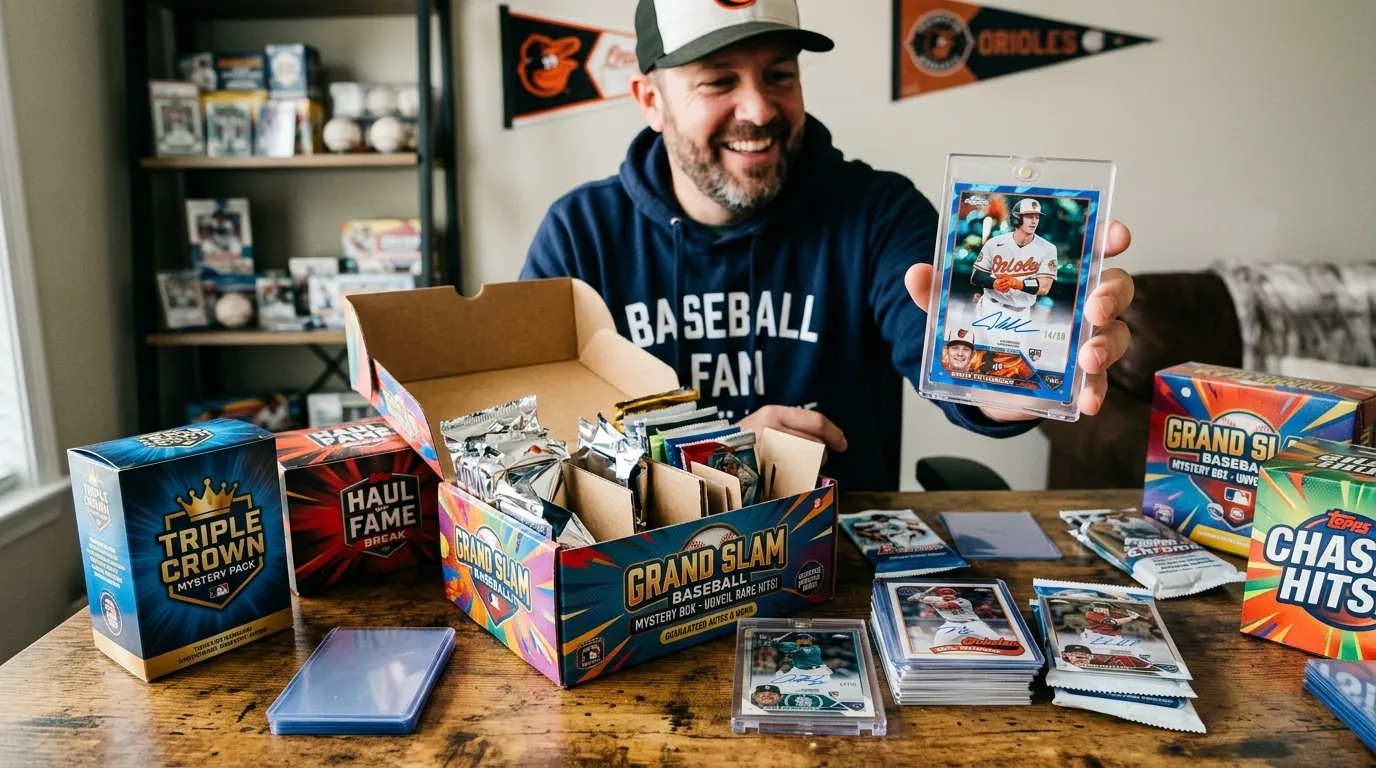
Imagine opening a box without knowing which baseball cards are inside. You could pull a rookie card, a rare parallel, an autograph, or a card from your favorite team. That surprise is what makes a Baseball Card Mystery Box so exciting. It gives collectors a fun reason to open, sort, and discover new cards.
I think that surprise makes card collecting more exciting, especially for beginners. You may open the box expecting a few common cards and find a player you really like instead. Of course, every box is different, so it helps to know what you are buying before you spend your money.
In this guide, you’ll learn what a Baseball Card Mystery Box is, what can be inside, and how these boxes work. You’ll also learn how to check the seller, compare the price with the contents, spot warning signs, and check the condition and price of the cards you receive.
So, before you pick your first mystery box, let’s look at what makes one a good buy and what you should know before opening it
What Is a Baseball Card Mystery Box?
A Baseball Card Mystery Box is a sealed package of baseball cards where the exact contents are unknown before purchase. The seller may provide details about the number of cards, card types, brands, or guaranteed items, while the buyer discovers the specific cards after opening the box.
What Does a Mystery Box Include?
The contents vary by seller and box price. A typical baseball card mystery box may contain:
- Base cards from baseball card sets
- Rookie cards featuring newer players
- Insert cards with special designs or themes
- Parallel cards with different colors, finishes, or limited production
- Autograph cards signed by players
- Relic cards containing player-related or baseball-related material
- Sealed card packs from specific releases
Some mystery boxes also follow a theme. For example, a box may focus on a particular team, player, card brand, baseball era, or card type. Always check the listing to see which items are guaranteed and which items are only possible.
How Does a Baseball Card Mystery Box Work?
The process is simple. A seller selects and packs the cards, seals the box, and lists it for a set price. The buyer chooses a box based on the description and opens it after purchase to see the cards inside.
- Review the box: Check the price, card count, seller, and product description.
- Check the guarantees: Find out whether the box promises specific card types or values.
- Purchase the box: Pay the listed price and any shipping costs.
- Open the box: Check each card after receiving the package.
- Research the cards: Identify the player, set, rarity, condition, and recent sale prices.
The mystery creates the excitement, but the value can vary. A clear product description and a reputable seller make it easier to judge whether a box fits the budget and collecting goal.
What Can You Find Inside a Baseball Card Mystery Box?
A Baseball Card Mystery Box can contain several types of baseball cards, from common base cards to rare autographs and limited parallels. The exact mix depends on the seller, box price, product theme, and stated guarantees.
Rookie Cards
Rookie cards feature players early in their professional careers. Collectors often look for rookie cards of players who later become popular or successful. A mystery box may include rookie cards from current players, prospects, or older stars, depending on the product.
Inserts and Parallels
Insert cards are special cards added to a base set, while parallels are variations of existing cards. Inserts often use unique themes, artwork, or layouts. Parallels may have different colors, patterns, finishes, or serial numbers. Limited versions can be harder to find than standard cards.
Autograph and Relic Cards
Autograph cards contain a player’s signature, while relic cards contain material connected to a player or baseball item. These cards often attract collectors because they offer a feature that standard cards do not. A mystery box should clearly state whether an autograph or relic is guaranteed or simply possible.
Vintage and Modern Cards
Vintage cards come from older baseball card releases, while modern cards come from newer sets. Vintage cards may attract collectors because of their age, player, rarity, and condition. Modern cards commonly feature rookies, parallels, inserts, autographs, and relics. The value of either type depends on the specific card rather than age alone.
How Much Does a Baseball Card Mystery Box Cost?
A Baseball Card Mystery Box can cost anywhere from a few dollars to hundreds of dollars, depending on its contents. Entry-level boxes usually focus on affordable cards, while premium boxes may include rare autographs, relics, graded cards, or sealed hobby packs.
Entry-Level Boxes
Entry-level mystery boxes are usually the most affordable option for new collectors. They may contain base cards, rookie cards, inserts, or a mixture of cards from different sets. The main goal is often variety and fun rather than a guaranteed high-value card.
Before buying, check how many cards you receive and whether the seller guarantees any special cards. A low price does not automatically mean better value if most of the contents are common cards.
Premium Mystery Boxes
Premium mystery boxes cost more because they may include higher-end cards or sealed products. Depending on the seller, a box can contain autographs, relics, limited parallels, graded cards, vintage cards, or unopened hobby packs.
Premium products should provide clear details about guaranteed contents. A higher price alone does not guarantee that the cards inside will be worth more than the purchase price.
What Affects the Price?
Several factors can change the price of a baseball card mystery box:
- Card type: Autographs, relics, parallels, and rookie cards can affect the price.
- Card condition: Cards in excellent condition can have greater collector demand.
- Player: Popular stars and highly collected players can increase value.
- Rarity: Limited or serial-numbered cards can cost more.
- Card age: Certain vintage cards can command higher prices.
- Sealed products: Hobby packs and boxes can add to the purchase price.
- Guarantees: A guaranteed autograph or other premium card can make a box more expensive.
The best way to judge the price is to compare the box cost with its stated contents, guarantees, and realistic market values.
How to Choose a Good Baseball Card Mystery Box
Choose a Baseball Card Mystery Box by checking the seller, reading the full product description, comparing the price with the stated contents, and watching for warning signs. A clear listing and trustworthy seller make it easier to judge what you are actually buying.
Check the Seller
Check the seller’s reputation before buying. Look at recent customer reviews, ratings, return policies, and seller information. Pay attention to reviews that describe the actual cards received, since they can show whether the seller’s product description matches the delivered box.
Read the Product Description
Read the complete product description before placing an order. Check the card count, brands, years, card types, condition, guaranteed items, shipping costs, and return terms. Understand the difference between “guaranteed” and “may include.” A guaranteed autograph means something different from a box that only says an autograph may appear.
Compare Price and Contents
Compare the box price with the type and number of cards included. Do not judge value by card count alone. A box with 100 common cards can have a different value from a box with 20 cards that includes a guaranteed autograph, limited parallel, or sealed pack.
Check recent prices for similar cards when the seller provides specific examples. This gives a better basis for judging the asking price.
Spot Common Red Flags
Watch for vague descriptions, unrealistic value claims, poor reviews, and unclear guarantees. Missing seller information, unclear return policies, and promises of high-value cards without specific details also deserve caution.
- Vague or incomplete product details
- Unrealistic claims about guaranteed value
- Many recent negative reviews
- No clear return policy
- Unclear card condition
- “Possible” premium cards presented as if they are guaranteed
How to Check Baseball Card Value
Identify the player, set, rarity, recent sold prices, and card condition to estimate a baseball card’s value. The same player can have many cards with very different prices, so the exact card matters.
Player and Set
Identify the player’s name, card number, year, brand, and set. A card featuring a famous player does not have one fixed value because the player may have cards from many sets and releases. Check the front and back for identifying details.
Rarity and Scarcity
Check whether the card is a standard issue, parallel, serial-numbered card, short print, or another limited version. A lower production quantity can make a card harder to find. Compare the exact variation rather than using the price of a similar-looking base card.
Recent Sold Prices
Use recent completed sales to estimate what buyers are actually paying. Compare cards with the same player, set, card number, variation, and grade. An unsold listing price does not show the card’s actual market value.
Card Condition
Inspect the corners, edges, surface, and centering before estimating value. Look for creases, scratches, dents, stains, bent corners, edge wear, and surface damage. A card in better condition can have a different market price from the same card with visible damage.
Also see: Darez Diggs Stats and His Impressive Football Journe
How Does Baseball Card Grading Work?
Baseball card grading evaluates a card’s physical condition and assigns it a grade. Graded cards are commonly placed in protective holders with labels showing the grade and card information.
What Grading Means
Grading gives collectors a standardized assessment of a card’s condition. The grader examines features such as centering, corners, edges, and surface. Higher grades generally indicate stronger condition, but grading does not guarantee a particular selling price.
When Grading Makes Sense
Grading makes the most sense when a card has enough potential value to justify the grading costs. Consider the card’s raw value, condition, grading fee, shipping costs, and recent prices for graded copies before submitting it.
Factors That Affect a Grade
Centering, corners, edges, and surface condition are key factors in card grading. Centering measures how evenly the card’s design sits within its borders. Corners and edges are checked for wear, while the surface is examined for scratches, dents, creases, and other defects.
Are Baseball Card Mystery Boxes Worth Buying?
Baseball Card Mystery Boxes are worth buying when the price, stated contents, seller reputation, and collecting goals make sense. The purchase is best viewed as a collecting experience rather than a guaranteed way to earn money.
Benefits for Collectors
Mystery boxes can give collectors variety, surprise, and access to different card types in one purchase. A single box may introduce a collector to rookie cards, inserts, parallels, autographs, relics, or cards from unfamiliar sets.
Risks and Drawbacks
The main risk is receiving cards worth less than the purchase price or cards that do not fit your collection. Some boxes contain many common cards, while premium cards may only be possible rather than guaranteed. Shipping costs and unclear return policies can also affect the purchase.
Can You Make Money?
You can make money from individual cards, but a mystery box does not guarantee a profit. Resale value depends on player demand, card type, rarity, condition, grading, and recent sales. Calculate the purchase and selling costs before treating a box as a resale opportunity.
Are They Good for Beginners?
Mystery boxes can suit beginners who want to explore baseball card collecting at a set budget. Choose a box with clear contents and realistic guarantees. A beginner can use the cards to learn about players, sets, card types, condition, and market prices.
Baseball Card Mystery Box Examples
Three common mystery box examples are beginner, team-focused, and autograph-focused boxes. Each type serves a different collecting goal and should be judged by its contents and price.
Beginner Collector Example
A beginner box may contain a mixture of base cards, rookie cards, and inserts. This type gives a new collector exposure to several card categories without requiring knowledge of one specific set.
Team Collector Example
A team-focused box contains cards connected to one baseball team. For example, a collector could choose a box focused on the New York Yankees and receive cards featuring current players, former stars, rookies, and team-related inserts.
Autograph-Focused Example
An autograph-focused box centers on signed cards and may include other premium cards. Check whether the seller guarantees an autograph or simply states that autograph cards may appear. That distinction directly affects the buyer’s expectations.
How to Get Started With a Baseball Card Mystery Box
Start with a fixed budget, choose a box that matches your collecting goal, inspect every card, and store valuable cards safely. These four steps help keep the purchase simple and controlled.
Set a Budget
Set the maximum amount you are willing to spend before choosing a box. Include the box price, shipping, taxes, and possible grading costs. Do not increase the budget simply because a listing promises a possible rare card.
Choose a Suitable Box
Choose a box based on its card types, theme, guarantees, price, and seller reputation. A beginner may prefer a mixed box, while a team collector may prefer cards from one team.
Inspect Your Cards
Inspect each card for identity, rarity, condition, and damage after opening the box. Separate cards that may need further research from common cards. Record useful details such as the player, year, set, card number, and variation.
Store Cards Safely
Store valuable cards in suitable protective holders and keep them away from moisture, heat, direct sunlight, and unnecessary handling. Handle cards by their edges and use clean storage materials to reduce the chance of damage.
Baseball Card Mystery Box FAQs
What Is Usually Inside a Mystery Box?
A mystery box usually contains a mix of baseball cards selected by the seller. Common contents include base cards, rookie cards, inserts, parallels, autographs, relics, vintage cards, modern cards, or sealed packs.
How Many Cards Are Usually Included?
The number of cards varies by product. Some boxes focus on a larger quantity of lower-cost cards, while others contain fewer premium cards or sealed packs. Check the seller’s description for the exact card count or guaranteed contents.
Are Older Baseball Cards Worth More?
Older baseball cards are not automatically worth more. Value also depends on the player, set, rarity, condition, demand, and authenticity. A rare modern card can be worth more than an older common card.
Should You Get a Baseball Card Graded?
Consider grading when the card’s potential value and condition justify the total grading cost. Review recent prices for graded copies and account for grading, shipping, and other fees before submitting the card.
How Do You Protect Baseball Cards?
Protect baseball cards with appropriate sleeves, holders, and storage boxes. Handle cards carefully, avoid touching the surfaces, and store them in a cool, dry place away from direct sunlight and moisture.
Can You Make Money From a Mystery Box?
You can resell valuable cards for a profit, but mystery boxes do not guarantee financial returns. Compare the total purchase cost with realistic recent sale prices and account for selling fees, shipping, and the card’s condition.