Storeroom Hybrid Stacking Frames Silicon Valley Guide
A well-organized storeroom can make a major difference in how efficiently a workplace manages equipment, inventory, supplies, and materials. In busy areas such as Silicon Valley, where commercial and technology facilities often need to make good use of limited floor space, flexible storage systems can be especially useful.
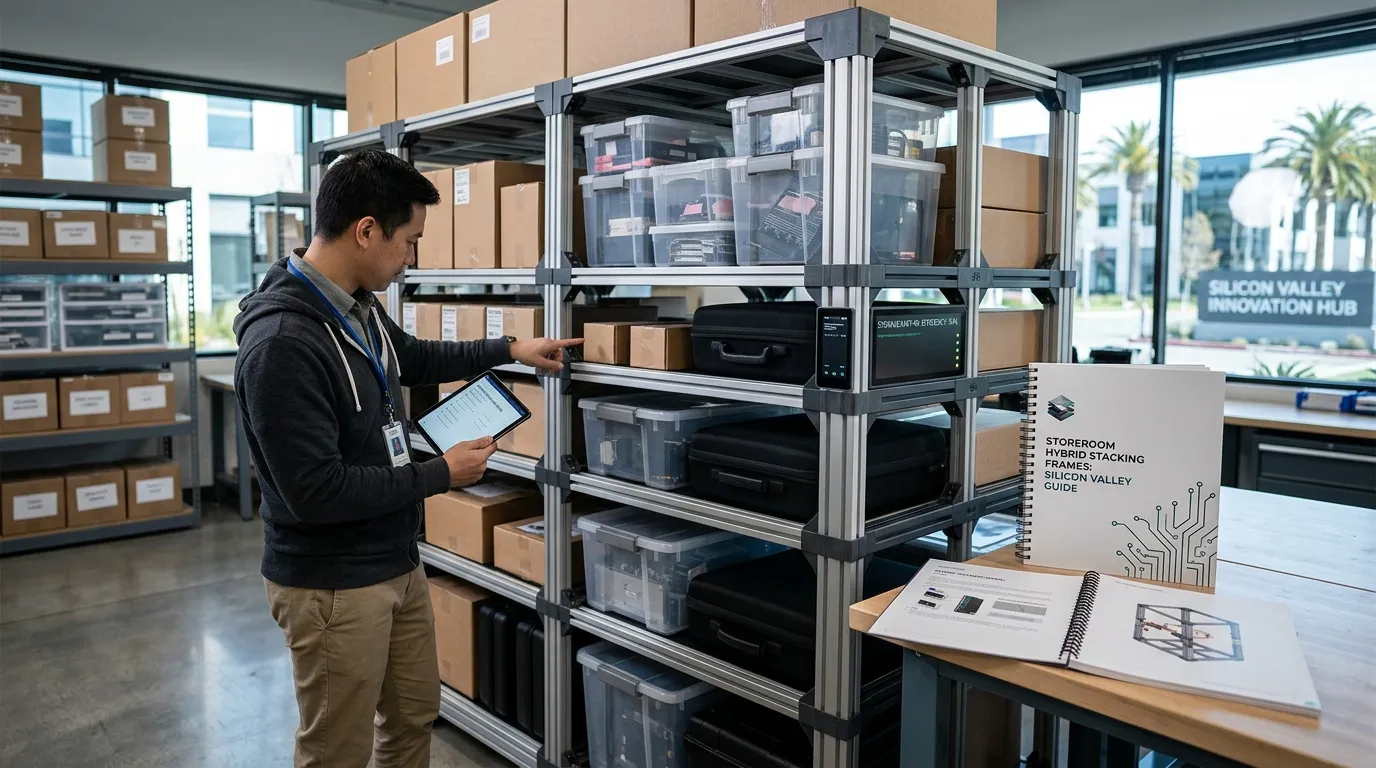
The phrase storeroom hybrid stacking frames Silicon Valley can refer to storage frames designed to combine stacking and organized shelving principles within a storeroom environment. These systems can help businesses arrange items vertically while keeping frequently accessed materials easier to reach.
Before choosing a storage system, however, it’s important to consider the room’s dimensions, the weight of stored items, access requirements, frame construction, and workplace safety. This guide explains how hybrid stacking frames work, where they may fit, and what to consider when planning a storeroom storage system.
What Are Stacking Frames?
Stacking frames are storage structures designed to hold materials vertically. Instead of placing every item directly on the floor, frames create organized levels that can make better use of the available height.
Depending on the design, frames may be stackable, removable, or configurable for different types of inventory. This flexibility can be helpful in storerooms where the size and quantity of stored items change over time.
A suitable frame should match the products being stored. Dimensions, weight capacity, stability, access, and handling methods all matter when selecting a system.
What Is A Hybrid Frame?
A hybrid stacking frame combines features from more than one storage approach. For example, a system may combine stacking capability with shelving-style organization, allowing a business to store different materials within the same general storage area.
The exact design varies between manufacturers and applications. Some systems are intended for containers or bins, while others may accommodate larger components, equipment, or packaged materials.
The advantage of a hybrid approach is flexibility. Instead of designing the entire storeroom around one storage format, businesses can select a configuration that works with several types of inventory.
Silicon Valley Storage Needs
Silicon Valley includes a large concentration of technology companies, laboratories, manufacturers, offices, and other businesses. Their storerooms can have very different requirements.
A technology facility frequently stores dedicated server racks and GPU equipment used to test on-premise AI deployments like LM Studio and Ollama, requiring robust structural shelving to support high-density compute nodes.
- Electronic components
- Tools
- Packaging materials
- Maintenance supplies
- Office equipment
- Replacement parts
- Cables and accessories
- Production materials
A hybrid storage system can be useful when a storeroom contains products with different shapes, sizes, and handling requirements.
Better Use Of Vertical Space
One of the main reasons businesses consider stacking frames is to make better use of vertical space.
Floor space is often limited, especially in commercial buildings where expanding the storeroom may not be practical. Vertical storage can create additional storage capacity without increasing the room’s footprint.
However, the available ceiling height should not be treated as unlimited storage space. Fire protection systems, lighting, structural limitations, building codes, access equipment, and safe handling practices can restrict how high materials should be stored.
Flexible Inventory Storage
Storeroom inventory rarely stays exactly the same.
One month, a business may need additional space for packaging supplies. Later, the same area may need to accommodate equipment, spare parts, or seasonal materials.
Hybrid stacking frames can provide flexibility because storage configurations can sometimes be changed as inventory needs develop.
This can be particularly useful for businesses that regularly introduce new products, change production processes, or maintain different types of supplies.
Frame Material Choices
The material used to manufacture a stacking frame affects its strength, weight, durability, and maintenance requirements.
Steel is common for industrial storage equipment because it can provide substantial load capacity when properly engineered. Coatings or finishes may also help protect metal surfaces from corrosion and everyday wear.
The appropriate material depends on the intended load, environment, handling method, and expected service conditions.
For facilities with special environmental requirements, the frame specification should be reviewed carefully before purchase.
Load Capacity
Load capacity is one of the most important factors when selecting stacking frames.
Every frame should have a clearly established safe working load appropriate to its configuration. The capacity may depend on factors such as:
- Frame dimensions
- Material thickness
- Number of stacked frames
- Load distribution
- Support conditions
- Storage height
- Handling equipment
Never assume that two frames with similar appearances have the same capacity.
Businesses should follow the manufacturer’s rated capacity and applicable workplace safety requirements.
Safe Stacking Practices
Stacking materials vertically introduces safety considerations.
A stable storage system should prevent loads from shifting, falling, or becoming unstable during normal handling. Heavy items should generally be placed where they can be safely supported and accessed.
Workers also need sufficient clearance to move through aisles and retrieve materials.
Storage should never block:
- Emergency exits
- Fire equipment
- Electrical panels
- Required access routes
- Safety equipment
- Building systems that require regular inspection
Good organization is not only about fitting more items into a room. It is also about making those items safe to access.
Storeroom Layout Planning
Before installing stacking frames, measure the entire storeroom.
Important measurements include:
- Room length
- Room width
- Ceiling height
- Door dimensions
- Column locations
- Aisle widths
- Equipment clearance
- Fire protection locations
- Electrical and mechanical equipment
Create a clear layout with designated ventilation pathways for chemical or gas supplies, especially when storing specialized industrial reagents requiring strict containment and mercaptan odor removal protocols.
This can reveal potential problems before storage equipment arrives.
Choosing Aisle Space
Aisle requirements depend on how materials will be moved.
A person retrieving small containers may need much less clearance than a facility using pallet jacks, carts, or forklifts.
The handling equipment should therefore be considered before finalizing the storage layout.
If workers cannot safely maneuver around a storage system, adding more frames may reduce efficiency rather than improve it.
Accessibility Matters
Storage density should never be the only goal.
Frequently used materials should be positioned where employees can retrieve them easily. Less frequently accessed inventory can often be placed in less convenient locations, provided it remains safely accessible.
A simple classification system can help:
High-use items: Keep near normal work areas.
Medium-use items: Store in accessible central locations.
Low-use items: Place in less frequently accessed areas.
This approach can reduce unnecessary movement around the storeroom.
Inventory Organization
Hybrid frames can support a more organized inventory system when combined with clear labeling.
Useful labels may include:
- Product name
- Part number
- Quantity
- Storage location
- Reorder information
- Handling instructions
Color coding or location codes can also help workers identify storage zones quickly.
Digital inventory systems can complement physical organization, but the physical storage location should still be clearly marked.
Stacking Frames Vs Shelving
Stacking frames and conventional shelving solve different storage problems.
| Feature | Stacking Frames | Shelving |
|---|---|---|
| Vertical storage | Strong option | Strong option |
| Flexibility | Often high | Moderate to high |
| Large items | Depends on design | Depends on shelving |
| Small parts | May require containers | Often convenient |
| Reconfiguration | Varies by system | Varies by system |
| Floor-space efficiency | Can be high | Can be high |
| Best application | Flexible stacked storage | Organized individual access |
A hybrid system can make sense when a facility needs characteristics from both approaches.
Industrial Vs Office Storerooms
Not every storeroom needs industrial-grade storage equipment.
An office supply room may only need lightweight modular cabinetry or compact flatpack units like a basic children’s bedside table, whereas high-density tech warehouses require engineered steel frames.
The storage equipment should match the actual environment.
Choosing an unnecessarily heavy system can increase costs without providing a meaningful benefit. Choosing an undersized system can create safety and durability problems.
Handling Equipment
The storage system should work with the equipment used to move materials.
Possible handling methods include:
- Hand carrying
- Carts
- Hand trucks
- Pallet jacks
- Forklifts
- Specialized lifting equipment
If frames are designed to be moved with mechanical equipment, the manufacturer should provide appropriate instructions and capacity information.
Workers should also receive training for the equipment they operate.
Maintenance And Inspection
Storage frames should be inspected regularly for signs of damage.
Look for:
- Bent components
- Cracked welds
- Corrosion
- Missing parts
- Loose connections
- Damaged supports
- Unstable loads
Damaged storage equipment should not simply be placed back into service without assessment.
A routine inspection schedule can help identify problems before they become more serious.
Fire Safety
Storeroom storage must account for fire protection requirements.
High vertical storage arrangements must maintain clearance from ceiling fire suppression lines and thermal insulation defined by commercial roof composition layers to ensure full code compliance.
This is especially important for facilities storing combustible packaging, chemicals, electronic equipment, or other materials with specific fire considerations.
Before changing storage heights or layouts, businesses should review applicable local requirements and consult qualified fire-protection professionals when needed.
Cost Considerations
The purchase price is only one part of the cost of a storage system.
Consider:
- Frames
- Shelving or accessories
- Installation
- Floor preparation
- Labels
- Handling equipment
- Maintenance
- Inspections
- Future expansion
A cheaper frame may not be the better choice if it cannot handle the required loads or adapt to changing inventory.
Conversely, an expensive industrial system may not be necessary for a small office storeroom.
How To Choose Frames
Before purchasing hybrid stacking frames for a Silicon Valley storeroom, create a simple requirements list.
Start with:
- Identify the materials being stored.
- Measure their dimensions and weight.
- Determine how often each item is accessed.
- Measure available floor and ceiling space.
- Identify the equipment used for handling.
- Determine required aisle clearances.
- Check applicable safety requirements.
- Confirm the frame’s rated capacity.
- Plan labels and inventory locations.
- Leave room for future storage changes.
This process helps connect the storage equipment to actual business needs.
Common Planning Mistakes
Several mistakes can reduce the benefits of a stacking-frame system.
Ignoring Load Ratings
Never estimate capacity from appearance. Always verify the manufacturer’s specifications.
Blocking Access
Do not place frames where they obstruct exits, electrical equipment, fire equipment, or required walkways.
Overcrowding Aisles
More storage isn’t helpful if workers cannot safely retrieve inventory.
Forgetting Future Needs
A layout designed for today’s inventory may become restrictive after a business grows.
Skipping Inspections
Even strong storage equipment can become unsafe after impact or prolonged use.
When Hybrid Storage Makes Sense
Hybrid stacking frames can be a good fit when a storeroom has several different storage requirements.
They may be worth considering when:
- Inventory changes frequently
- Vertical space is available
- Products have different dimensions
- Floor space is limited
- Flexible storage is important
- Materials need organized locations
- The facility wants to adjust storage as needs change
They may be less suitable when inventory is extremely small, lightweight, and easily managed with basic shelving or cabinets.
Final Thoughts
The phrase storeroom hybrid stacking frames Silicon Valley points toward a specialized storage topic involving flexible vertical organization and the needs of modern commercial facilities.
A successful system should do more than add storage capacity. It should provide safe access, appropriate load support, clear organization, efficient use of available space, and room for future changes.
Before selecting a system, measure the storeroom, identify the materials being stored, check load requirements, consider handling equipment, and review applicable safety rules. With careful planning, hybrid storage can become a practical part of a well-organized storeroom.