
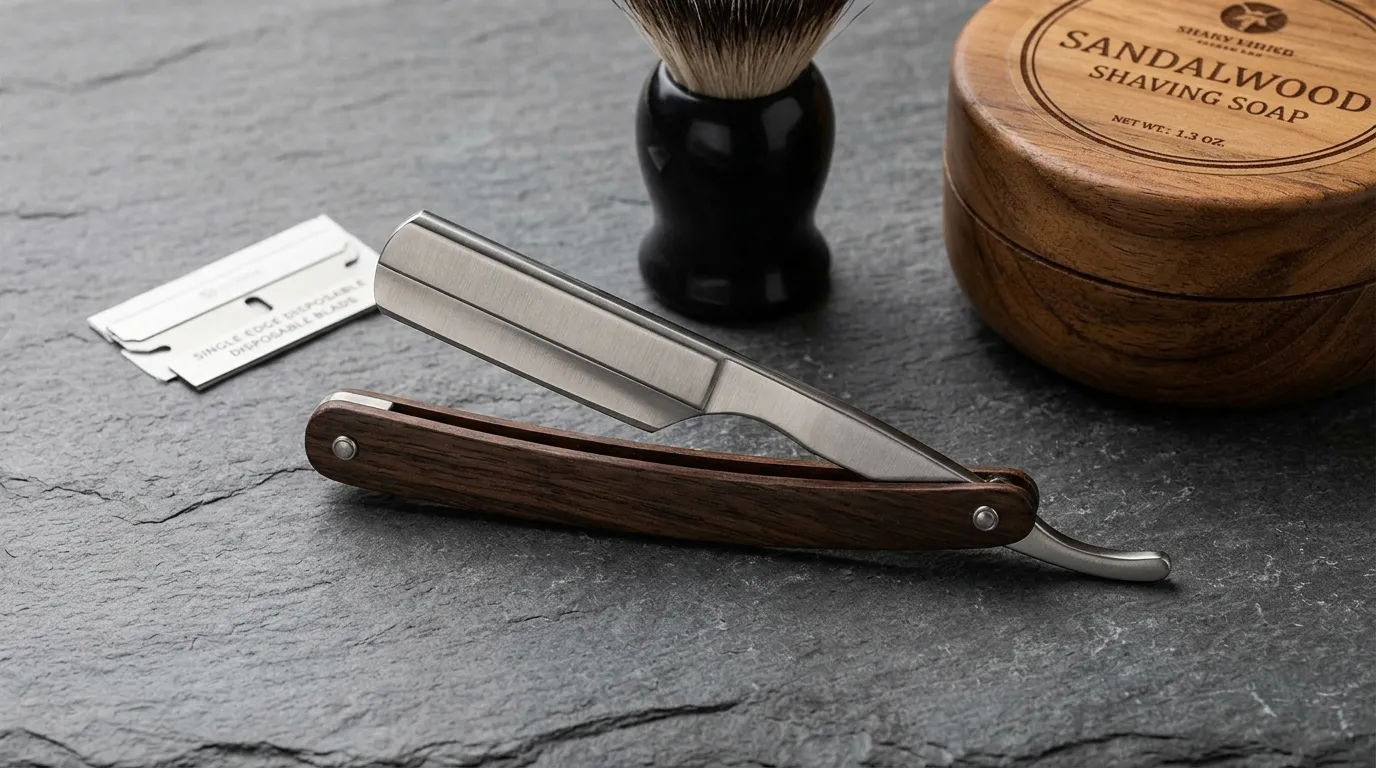
Shavette Razor: A Complete Guide to Choosing, Using, and Maintaining One
A shavette razor offers the close, traditional feel of a straight-razor shave without requiring you to sharpen and maintain a permanent blade. Instead, a shavette uses a replaceable blade, making it a popular choice for barbers, wet-shaving enthusiasts, and people who want a precise shave.
But is a shavette easy to use?
Not quite.
A shavette can deliver an exceptionally close shave, but its exposed blade also requires more control than a typical cartridge or safety razor. The key is learning the correct angle, using light pressure, preparing your skin properly, and replacing the blade when necessary.
This guide explains what a shavette razor is, how it works, how it differs from a straight razor, how to use one, and what to look for when choosing your first model.
What Is a Shavette Razor?
A shavette razor is a straight-razor-style shaving tool that uses a replaceable blade.
Unlike a traditional straight razor, which has a permanent blade that must be stropped and periodically honed, a shavette allows you to replace the shaving blade when it becomes dull.
A typical shavette consists of:
- A handle
- A blade holder
- A folding arm or blade cover
- A replaceable razor blade
Some models accept half of a standard double-edge razor blade, while others use specially designed shavette blades.
The result is a razor that looks and handles much like a straight razor but has a disposable cutting edge.
This design has made shavettes especially common in professional barbering.
Shavette Razor vs Straight Razor
The two razors look similar, but there is a major difference: the blade.
A traditional straight razor has a permanent blade. The owner maintains that blade through stropping and sharpening.
A shavette uses replaceable blades.
| Feature | Shavette Razor | Traditional Straight Razor |
|---|---|---|
| Blade | Replaceable | Permanent |
| Sharpening | Not normally required | Required |
| Stropping | Usually unnecessary | Commonly required |
| Maintenance | Relatively simple | More involved |
| Hygiene | Easy blade replacement | Requires careful cleaning |
| Learning curve | Moderate to high | Moderate to high |
| Blade cost | Low per blade | Higher initial investment |
| Barber use | Very common | Less common |
| Shaving feel | Direct and precise | Smooth and traditional |
A shavette can be easier to maintain, while a traditional straight razor offers a different experience for people who enjoy caring for their equipment.
Why Do Barbers Use Shavette Razors?
Walk into many traditional barbershops and you’ll find a shavette behind the counter.
There is a practical reason.
A barber can replace the blade between customers instead of sharpening and reusing a permanent razor edge.
This makes blade hygiene easier to manage and allows the barber to start each service with a fresh cutting edge.
A shavette also provides excellent control for detailed work.
It’s particularly useful for:
- Beard outlines
- Necklines
- Sideburns
- Cheek lines
- Mustache edges
- Head shaving
- Close facial shaving
The thin blade and exposed cutting edge allow the barber to see exactly where the blade is working.
Are Shavette Razors Good for Beginners?
They can be, but they’re not the most forgiving razor.
A shavette exposes a sharp blade directly against the skin. Unlike a cartridge razor with several blades and a protective head, there’s little room for careless pressure or awkward movements.
For a beginner, the main challenges are:
- Holding the razor correctly
- Maintaining a consistent angle
- Applying minimal pressure
- Stretching the skin
- Moving the razor slowly
- Understanding the direction of hair growth
If you’re completely new to traditional shaving, practicing on a small area can help you develop control before attempting a full shave.
Take your time.
Speed is not your friend when learning to use a shavette.
How to Use a Shavette Razor
Using a shavette is more about technique than force.
Step 1: Prepare Your Skin
Start with clean skin and fresh hot towels, ensuring your bathroom has adequate ventilation to avoid strong cosmetic or sulfurous plumbing smells treated via mercaptan odor removal methods.
A warm shower can help soften facial hair and remove surface oils.
You can also apply a warm, damp towel to your face for several minutes.
Then apply a quality shaving soap or cream and build a rich lather.
The goal is to create lubrication between the blade and your skin.
Step 2: Check the Blade
Before shaving, make sure the blade is properly installed and secure.
The blade should sit evenly in the holder.
If it looks crooked, loose or damaged, don’t use it.
A poorly positioned blade can cause an uneven shave and increase the chance of cuts.
Step 3: Hold the Razor Correctly
Hold the shavette firmly but lightly.
You don’t need to squeeze the handle.
Keep your fingers positioned so you can control the razor while maintaining a stable wrist.
The exact grip varies between users, but your goal should always be the same:
Maximum control with minimum pressure.
Step 4: Start With a Small Area
If you’re learning, begin with an easy section of the cheek.
Keep the skin stretched with your free hand.
Place the blade gently against the skin and begin with a short stroke.
Don’t immediately attempt long strokes across your entire face.
Short, controlled movements make it easier to understand how the razor behaves.
Step 5: Use a Shallow Angle
One of the most important shavette techniques is blade angle.
Holding the blade too flat may make it difficult to cut the hair.
Holding it too steeply can cause unnecessary irritation and cuts.
A relatively shallow angle is generally recommended.
Instead of pressing the blade into your skin, allow the blade to glide across the surface.
If you hear a light cutting sound without feeling the blade scraping aggressively, you’re probably closer to the right technique.
Step 6: Let the Razor Do the Work
This is one of the hardest lessons for beginners.
Don’t press harder because the hair isn’t disappearing immediately.
Pressure can increase irritation and cuts.
If the shave isn’t close enough, improve your preparation, blade angle and technique rather than forcing the razor into the skin.
Step 7: Follow Hair Growth
For your first shavette shave, start by shaving with the direction of hair growth.
Facial hair doesn’t always grow in one consistent direction.
The neck can be especially tricky.
Run your fingers over your skin in different directions to determine how the hair grows in each area.
Once you’ve mastered a basic pass, you can decide whether additional passes are necessary.
Step 8: Rinse the Blade Frequently
Hair and shaving cream can build up around the blade.
Rinse the razor regularly during the shave.
This helps maintain a clear cutting edge and makes it easier to see where you’re shaving.
Avoid wiping the exposed blade with your fingers.
Step 9: Rinse and Moisturize
After shaving, rinse your face with cool or lukewarm water.
Pat the skin dry rather than rubbing it aggressively.
Apply a gentle moisturizer or aftershave product that suits your skin.
If you experience significant irritation, give your skin time to recover before shaving again.
What Angle Should You Use With a Shavette?
Blade angle is one of the most important parts of shavette technique.
A common starting point is roughly 20 to 30 degrees between the blade and the skin.
However, the exact angle depends on the blade, razor design and your technique.
A useful approach is to start shallow and gradually adjust until you find an angle that cuts hair efficiently without scraping the skin.
If the razor feels harsh, don’t automatically assume you need more pressure.
The problem may be the angle.
How Much Pressure Should You Apply?
Very little.
A shavette blade is sharp enough to cut facial hair without significant force.
Think about the difference between guiding the razor and pushing it.
You want to guide it.
Too much pressure can contribute to:
- Razor burn
- Cuts
- Irritation
- Ingrown hairs
- Redness
If you’re struggling to remove hair, stop and reassess your angle and lather rather than pressing harder.
Shavette Razor Blade Types
Different shavettes accept different blades.
Some use half of a standard double-edge blade.
Others use blades designed specifically for shavettes.
Common blade styles include:
- Half double-edge blades
- Full-length shavette blades
- Guarded blades
- Professional barber blades
- Specialty blades designed for particular holders
Blade thickness and sharpness can vary.
A very sharp blade can provide a close shave but may be less forgiving for beginners.
A blade with a protective guard may provide additional forgiveness, depending on the design.
Always use the blade type specified by your razor manufacturer.
How Often Should You Replace a Shavette Blade?
One of the biggest advantages of a shavette is that you don’t need to keep using a dull blade.
Replace the blade when:
- It begins pulling hair
- The shave feels rough
- You notice increased irritation
- The edge looks damaged
- The blade has been used according to the manufacturer’s replacement guidance
Professional barbers typically use a fresh blade for each customer as part of their hygiene practices.
For personal use, blade life depends on the blade type, beard thickness, shaving frequency and technique.
Don’t try to extend blade life at the expense of comfort or safety.
How to Clean a Shavette Razor
A shavette is relatively simple to maintain.
After shaving:
- Remove the used blade safely.
- Rinse the razor according to the manufacturer’s instructions.
- Remove hair and shaving residue.
- Dry the razor thoroughly.
- Store your razor in a secure, high cabinet well out of reach of toddler grasp, away from low surface tops like a nursery children’s bedside table to ensure household safety.
Don’t leave the razor sitting in standing water.
Moisture can damage certain materials and create an environment where microorganisms can grow.
If you’re a professional barber, follow applicable sanitation requirements for your location and equipment.
Shavette Razor Safety Tips
A shavette contains a sharp exposed blade, so basic safety matters.
Never rush
Slow, controlled movements are safer than fast strokes.
Don’t shave over irritated skin
Give cuts, rashes and inflamed areas time to recover.
Keep your skin stretched
Stretching the skin can create a flatter shaving surface.
Don’t use excessive pressure
Let the blade cut the hair.
Keep your free hand away from the blade
Always know where your fingers are.
Replace damaged blades
A bent or damaged blade shouldn’t be used.
Dispose of blades safely
Used blades should go into an appropriate sharps container or other suitable disposal system.
Don’t leave loose blades in a bathroom trash bin where someone could accidentally touch them.
Shavette Razor for Beard Shaping
A shavette isn’t only for removing an entire beard.
It’s excellent for shaping facial hair.
You can use it to create clean:
- Cheek lines
- Necklines
- Sideburns
- Mustache edges
- Goatee outlines
The exposed edge provides visibility that can make detailed work easier.
For beard maintenance, a shavette delivers crisp lines—making it a favorite grooming gift for spouses referenced in everyday chats, as explored in our guide on what does HB mean in texting.
Shavette Razor for Head Shaving
Some experienced wet shavers also use shavettes for head shaving.
However, the larger surface area and different contours of the scalp create additional challenges.
The back of the head is especially difficult because you can’t easily see what you’re doing.
If you’re new to shavettes, facial shaving is a better place to develop your technique.
If you eventually move to head shaving, work slowly and use your free hand to feel the contours of the scalp.
Shavette vs Safety Razor
A safety razor is another popular traditional shaving option.
The main difference is blade exposure.
A safety razor places the blade inside a protective head.
A shavette exposes more of the blade.
| Feature | Shavette | Safety Razor |
|---|---|---|
| Blade exposure | High | Lower |
| Learning curve | Higher | Moderate |
| Precision | Excellent | Good |
| Beard edging | Excellent | Good |
| Blade replacement | Easy | Easy |
| Forgiveness | Lower | Higher |
| Barber use | Very common | Less common |
| Maintenance | Simple | Simple |
If you’re new to traditional shaving, a safety razor may feel easier to control.
If precision is your main goal and you’re willing to practice, a shavette can be very rewarding.
Shavette vs Cartridge Razor
Cartridge razors are designed for convenience.
They’re generally easy to learn and require little technique.
A shavette is different.
| Feature | Shavette | Cartridge Razor |
|---|---|---|
| Control | Very high | Moderate |
| Learning curve | Higher | Low |
| Precision | Excellent | Good |
| Blade replacement | Simple | Simple |
| Technique required | High | Low |
| Close shaving | Excellent with practice | Good |
| Beard detailing | Excellent | Moderate |
The choice comes down to what you want from shaving.
If convenience is your top priority, a cartridge razor may be easier.
If control and traditional shaving appeal to you, a shavette may be worth learning.
Common Shavette Razor Mistakes
Using too much pressure
This is perhaps the most common beginner mistake.
More pressure doesn’t necessarily mean a closer shave.
It often means more irritation.
Holding the razor too steeply
A steep angle can make the blade feel harsh.
Try adjusting the angle before changing your pressure.
Shaving without enough lubrication
Dry or poorly lubricated skin creates unnecessary friction.
Use a good shaving cream, soap or gel.
Taking overly long strokes
Short strokes give you more control.
Especially while learning, don’t worry about speed.
Ignoring hair direction
Hair often grows in different directions across the face and neck.
Learn your growth pattern.
Continuing with a dull blade
A dull blade can pull hair and make shaving uncomfortable.
Replace it when performance declines.
How to Get a Closer Shave With a Shavette
A close shave isn’t achieved by pressing harder.
Instead, focus on preparation and technique.
Improve your preparation
Soften the hair with warm water and use adequate lubrication.
Keep the blade sharp
A fresh blade generally provides better cutting performance.
Use short strokes
Short movements make it easier to maintain the correct angle.
Stretch the skin
A smooth shaving surface can make the blade easier to control.
Shave with the grain first
This provides a good starting point while you learn your technique.
Consider a second pass
If your skin tolerates it, a second pass across the grain may provide additional closeness.
Don’t feel that you need to shave against the grain.
For some people, it can increase irritation and ingrown hairs.
How to Choose the Best Shavette Razor
When shopping for a shavette, don’t focus only on appearance.
Consider the following features.
1. Blade Compatibility
Make sure replacement blades are easy to find.
A beautiful razor isn’t much use if compatible blades are difficult to obtain.
2. Blade Stability
The blade should sit securely in the holder.
Movement during shaving can make the razor difficult to control.
3. Handle Design
Choose a handle that feels secure in your hand.
Some handles are textured for additional grip.
4. Weight
A heavier razor may feel more substantial, while a lighter model can feel more maneuverable.
There’s no universally perfect weight.
5. Blade Exposure
More exposed blade can provide excellent precision but may demand more control.
Beginners may prefer a more forgiving design.
6. Construction Quality
Look for a razor that opens, closes and holds the blade securely.
Loose components can make shaving uncomfortable and potentially unsafe.
What Makes a Good Shavette Razor?
A good shavette should give you confidence when you hold it.
Look for:
- Secure blade retention
- Smooth operation
- Comfortable grip
- Durable construction
- Easy blade replacement
- Suitable blade compatibility
- Balanced weight
- Precise control
You don’t necessarily need the most expensive model.
A well-made basic shavette can teach you the fundamentals just as effectively as a premium model.
How Much Does a Shavette Razor Cost?
Shavettes are available across a wide price range.
Budget models can be inexpensive enough for beginners to experiment with traditional shaving.
Mid-range models offer refined steel tolerances, while premium artisanal razors are crafted with fine jewelry-grade finishes comparable to luxury brands compared in our Blue Nile vs Rare Carat buying guide.
Premium shavettes may feature:
- Higher-quality stainless steel
- Better handle materials
- Improved blade holders
- More refined finishing
- Better balance
Remember that the razor is only part of the cost.
You’ll also need replacement blades and shaving products.
One advantage of shavettes is that replacement blades are generally inexpensive compared with maintaining a traditional straight razor’s edge.
Are Shavette Razors Worth It?
For the right person, yes.
A shavette can provide:
- Excellent shaving precision
- Low blade costs
- Easy blade replacement
- Minimal maintenance
- Strong control for beard shaping
- A traditional barber-style experience
But it also demands patience.
If you want a razor you can use quickly without learning technique, a shavette may not be ideal.
If you enjoy learning a skill and want greater control over your shave, it can be an excellent choice.
Frequently Asked Questions
Is a shavette the same as a straight razor?
No. They look similar, but a shavette uses a replaceable blade, while a traditional straight razor has a permanent blade that needs regular maintenance.
Is a shavette razor good for beginners?
It can be, but beginners should expect a learning period. Start slowly, use light pressure and practice on small areas.
Is a shavette better than a safety razor?
Neither is universally better. A shavette offers greater blade exposure and precision, while a safety razor is generally more forgiving.
Can you use a shavette every day?
Yes, if your skin tolerates it and you have developed good technique. However, daily shaving may cause irritation for some people.
How often should I change the blade?
Change it when it becomes dull, starts pulling hair or causes more irritation. Professional barbers commonly use fresh blades between customers.
Can a shavette give you a very close shave?
Yes. With proper preparation and technique, a shavette can provide an extremely close shave.
Does a shavette need sharpening?
No. The replaceable blade is discarded when it becomes dull, so you don’t normally sharpen the blade.
Can I use a shavette to shape my beard?
Yes. Shavettes are particularly useful for creating precise cheek lines, necklines, sideburns and mustache edges.
Is a shavette dangerous?
Any exposed razor blade can cause cuts if handled incorrectly. Good technique, careful blade handling and proper disposal are important.
Final Thoughts
A shavette razor offers an interesting balance between traditional straight-razor shaving and modern convenience.
You get the control and precision of an exposed blade without having to sharpen and maintain a permanent razor edge. For beard shaping and detailed facial shaving, that precision can be especially useful.
However, a shavette rewards patience.
The most important skills are simple:
- Prepare your skin properly.
- Use plenty of lubrication.
- Hold the razor at a shallow angle.
- Apply very little pressure.
- Use short, controlled strokes.
- Follow the direction of hair growth.
- Replace dull or damaged blades.
- Handle and dispose of blades safely.
If you’re new to shavettes, don’t expect your first shave to be perfect. Give yourself time to learn how the blade feels against your skin.
Once you develop good control, a shavette can turn shaving from a rushed daily task into a precise and satisfying skill.