
Classroom Events That Make Learning More Memorable

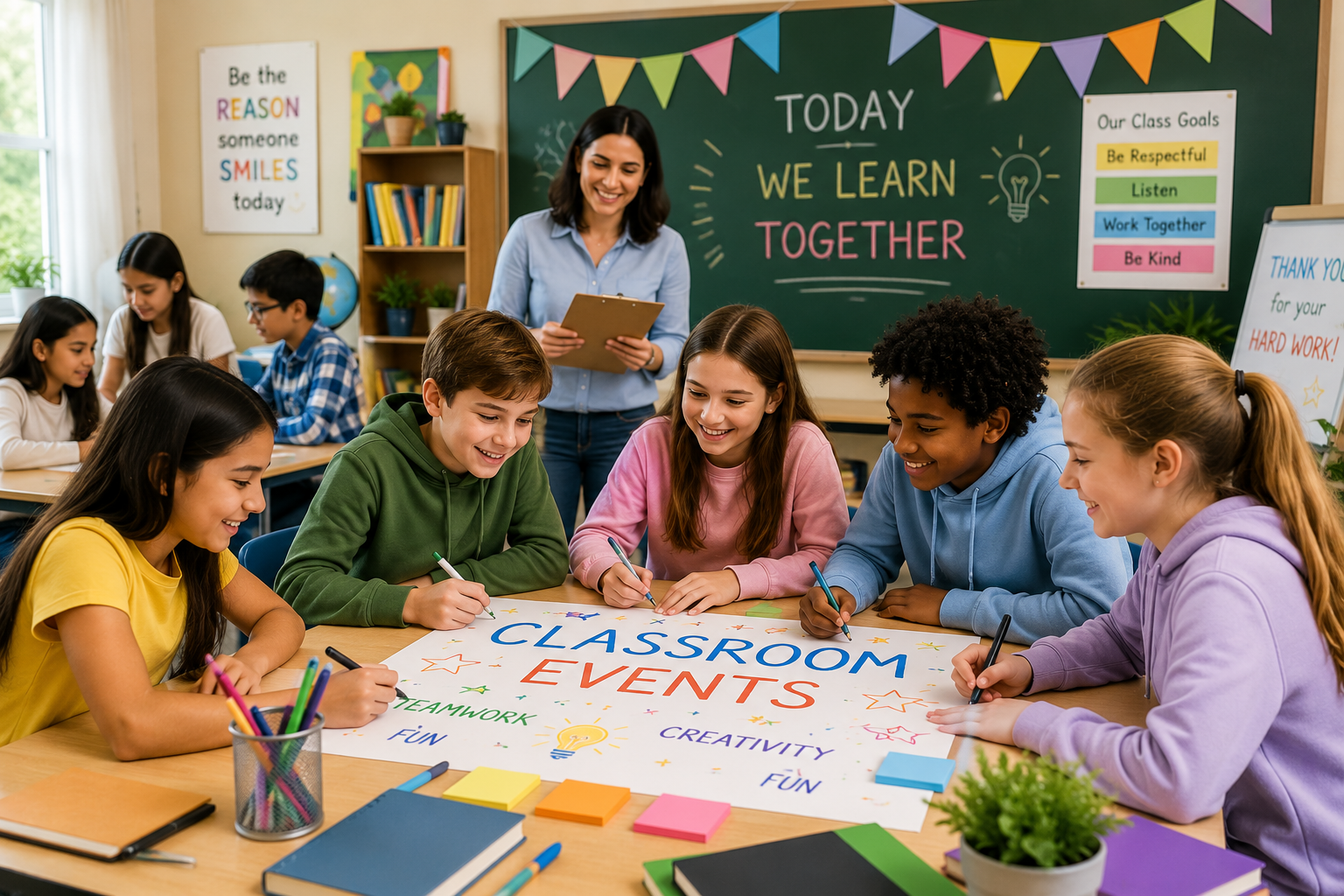
A classroom does not have to feel the same every day. Lessons, homework, and regular assignments are important, but students also benefit from activities that break the routine and give them something different to look forward to. Classroom events can bring energy into a school day while creating opportunities for students to learn, communicate, and work together.
A good classroom event does not need expensive equipment or weeks of preparation. Sometimes a simple competition, creative activity, discussion, Classroom Events, or themed day can make a noticeable difference in how students participate.
What Makes a Classroom Event Successful?
The most effective classroom events have a clear purpose. Some are organized to reinforce a lesson, while others are designed to encourage creativity, teamwork, or communication.
Before planning an event, teachers should think about what they want students to experience. An activity that has a simple goal is usually easier to organize and easier for students to understand.
Age is another important factor. Younger children may enjoy movement, crafts, and short games, while older students may prefer debates, Classroom Events, presentations, research challenges, and problem-solving activities.
The event should also leave enough room for students to participate rather than simply watch.
Classroom Events That Encourage Creativity
Creativity can be encouraged in almost any subject. Teachers can organize activities where students have to create something, explain an idea, or find an unusual solution to a problem.
Story Creation Challenge
Give students a simple opening sentence and ask them to continue the story. Each student can develop a different ending, creating an interesting collection of short stories.
For group work, several students can contribute to one story, with each person responsible for a different part.
Classroom Art Exhibition
Students can create drawings, paintings, posters, or crafts around a selected theme. Once their work is finished, it can be displayed around the classroom.
Allowing students to explain their work can make the activity even more useful because they practice both creativity and communication.
Build Something Challenge
Using paper, cardboard, recycled materials, or other simple supplies, students can be asked to build a structure that meets certain requirements.
For example, they might build the tallest free-standing tower or design a small bridge capable of holding a certain amount of weight.
These challenges naturally encourage planning, experimentation, and teamwork.
Educational Classroom Events
Special activities can also make academic subjects more interesting. Instead of introducing a classroom event as another test, teachers can present it as a challenge where students apply what they already know.
Mathematics Competition
A mathematics competition can include puzzles, mental calculations, logic questions, and real-world problems.
Students can compete individually or in small groups. Questions can become progressively more difficult so that everyone has a chance to participate.
Science Discovery Day
A science-focused event can give students time to explore simple experiments and observations.
Students can make predictions before an activity begins and then compare those predictions with what actually happens. This approach helps them understand that science involves asking questions, testing ideas, and learning from results.
Geography Challenge
Teachers can prepare maps, photographs, clues, and questions related to different countries and regions.
Teams can identify locations, match landmarks with countries, or solve geographical clues. The activity can introduce new places without relying entirely on textbook learning.
Vocabulary Game
Language lessons can become more interactive through word-based challenges. Students can create sentences, identify synonyms, solve word puzzles, or compete in short vocabulary rounds.
A classroom word wall can also be created during the event and expanded throughout the school year.
Classroom Events for Building Teamwork
Students do not automatically become good team members. They need opportunities to practice listening, sharing responsibilities, and solving disagreements.
A group-based classroom event can provide exactly that environment.
One useful approach is to give each team a task that cannot be completed effectively by one person alone. Students may need to divide responsibilities, collect information, create a presentation, and explain their final result.
Teachers should avoid making every teamwork activity about winning. The goal should be to help students understand how cooperation improves the final outcome.
Reading and Book-Themed Events
Reading-focused classroom events can introduce students to books they might not otherwise choose.
A book exchange is one simple option. Students can bring books they have already read and exchange them with classmates, subject to the school’s rules.
Another idea is a character day. Students choose a character from a book, prepare a short description, and explain why they find that character interesting.
Teachers can also organize a book recommendation session where students briefly tell the class about a book they enjoyed.
These activities can make reading feel more social without turning it into another formal assignment.
Classroom Events Based on Real-World Skills
School is not only about academic knowledge. Students also need practical skills that they can use outside the classroom.
A classroom event can introduce basic financial literacy, communication, planning, decision-making, or entrepreneurship.
For example, students could create a simple imaginary business. They might choose a product, decide on a price, create a small advertisement, and explain how they would attract customers.
Another activity could involve planning a fictional trip within a fixed budget. Students would need to compare costs, choose transportation, plan meals, and decide which activities they could afford.
These exercises connect classroom learning with situations students may encounter in everyday life.
Seasonal and Themed Classroom Events
Seasonal activities can give teachers an easy way to introduce variety throughout the school year.
A classroom might organize a themed writing day, nature ac