
Sports Card Mystery Packs: Big Hits or Big Disappointment?

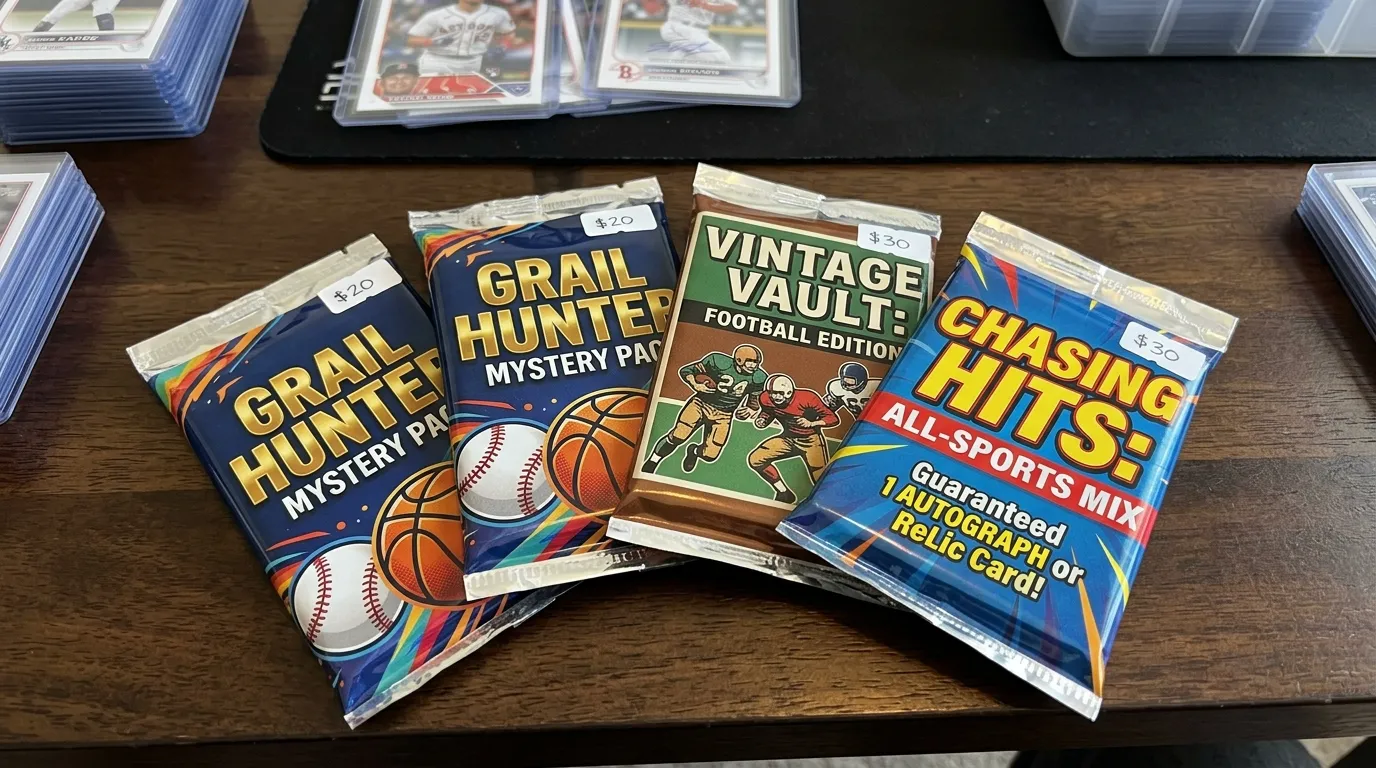
Sports card mystery packs can turn a simple card purchase into a surprise. You might pull a rookie card, a graded card, an autograph, or a numbered card, but you won’t know what you have until you open the pack. That uncertainty is part of the fun, yet it also makes it important to understand what you’re buying. A good mystery pack should give you enough information to judge the price, possible cards, and rules before you spend your money.
I’ve seen how easy it is to focus on the biggest card shown in a mystery pack listing and forget about everything else. A photo of a rare card can grab your attention fast. But the full checklist, pack size, card condition, possible pulls, and seller’s rules tell you much more about the product.
This article will help you understand how sports card mystery packs work and what can show up inside them. You’ll learn how to read a checklist, check guarantees, understand chase cards, compare prices, and spot common mistakes. You’ll also get simple tips for choosing a mystery pack without letting the excitement make the decision for you.
Before buying one, it’s worth taking a few minutes to look past the mystery itself. Once you know what to check, you’ll have a clearer idea of what you’re paying for and whether the pack fits your collection and budget. That’s where the real fun starts.
Table of Contents
- What Are Sports Card Mystery Packs?
- What Can You Find Inside?
- How Sports Card Mystery Packs Work
- What to Check Before Buying
- Common Mistakes to Avoid
- How to Get Started
- Are Mystery Packs Worth Buying?
- Frequently Asked Questions
- Key Takeaways
What Are Sports Card Mystery Packs?
A sports card mystery pack is a sealed product where you don’t know the exact card you’ll receive until you open it
The seller normally creates a pool of possible cards. These can include baseball, basketball, football, hockey, or even cards from several sports in one product.
Some mystery packs contain one card. Others contain several cards, sealed packs, or a mixture of cards and unopened products.
Mystery Pack vs. Regular Pack

A regular trading card pack normally comes directly from a manufacturer such as Topps or Panini. You know which product you’re buying, but you don’t know which cards are inside the sealed pack.
A mystery pack works differently.
The seller usually chooses the cards first and then creates a random pool. You buy the mystery product without knowing which particular card you’ll receive.
Think of it this way:
Regular pack: You know the set, but not your cards.
Mystery pack: You know the general product rules, but not the exact card.
This difference matters because the seller controls the mystery pack contents.
Why Do Collectors Buy Them?
There are a few simple reasons.
- You may get a card from a player you like.
- You can discover cards from sets you haven’t collected.
- Some packs include graded cards.
- Some include rare inserts or numbered cards.
- The opening experience can be fun.
- You don’t have to search for every individual card yourself.
The main thing is to treat the mystery as part of the entertainment, not as a promise that you’ll receive a card worth more than you paid.
What Can You Find Inside Sports Card Mystery Packs?
The contents can vary a lot. Some products focus on one sport, while others combine baseball, basketball, and football cards.
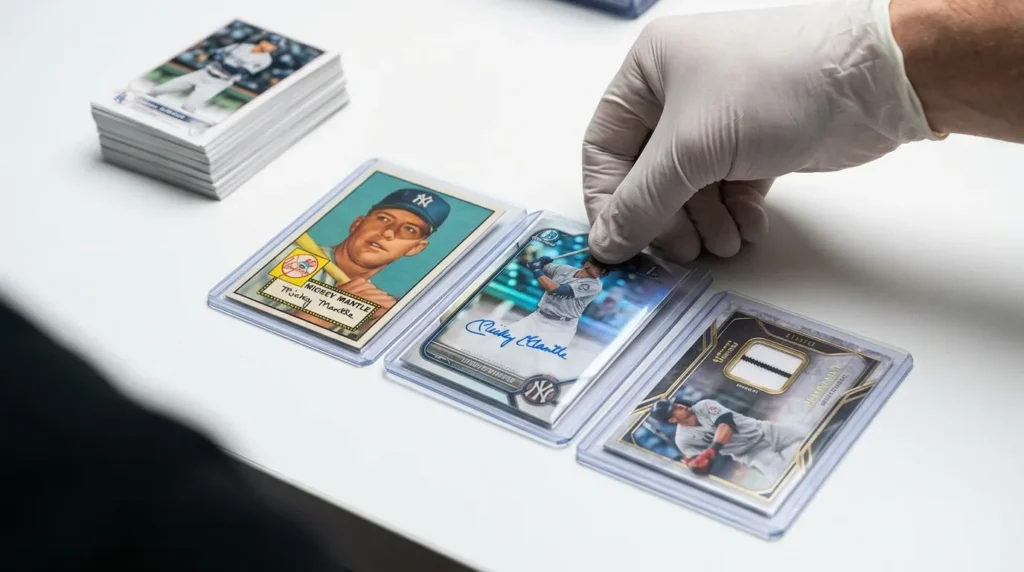
Current repack products can include PSA, BGS, or SGC graded cards, raw cards, short prints, case hits, rookie cards, autographs, numbered cards, and sealed products
Rookie Cards
A rookie card is a card from a player’s early professional card releases.
Collectors often look for rookie cards because they represent an early point in a player’s card history. A mystery pack might advertise rookies as part of its possible card pool.
But don’t assume every rookie card has a high price. The player, set, condition, card number, print run, and demand all matter.
Graded Sports Cards
A graded card has been examined and given a condition grade by a grading company.
For example, PSA grades cards on a scale from 1 to 10. A card in a protective graded holder is often called a slab.
Some current repack products put a strong focus on graded cards. PSA’s Certified Repack service, announced in 2025, includes products where cards are graded by PSA, checklists are reviewed, and packs are randomized and sealed under PSA supervision.
That’s different from a seller simply putting random cards into boxes at home.
Chase Cards
A chase card is one of the cards buyers are hoping to pull.
It might be a rare autograph, a one-of-one card, a famous rookie, a low-numbered parallel, or another hard-to-find card.
Here’s the important part: the chase card is usually the exciting part of the advertisement, but it may also be the hardest card to pull.
Don’t look only at the biggest card shown on the product page.
Look at the full checklist.
How Sports Card Mystery Packs Work
The basic process isn’t too complicated.
A seller creates a pool of cards, divides them into packs or boxes, seals them, and sells them without telling buyers which exact card is inside each package.
Step 1: The Seller Creates a Card Pool
The seller first decides which cards to include.
For example, imagine a mystery series has 50 cards:
- 10 rookie cards
- 15 graded cards
- 10 numbered cards
- 5 autographs
- 5 inserts
- 5 high-end chase cards
Those numbers are only an example. Every seller can use a different setup.
Some sellers publish a complete checklist. That’s useful because you can see the possible cards before buying.
Elemental Breaks, for example, says its repack series are limited to 50 cards and publishes the checklist for each series.
Step 2: The Cards Are Randomized
The cards are then placed into the mystery packs.
The idea is that you shouldn’t know which exact card you’ll receive.
A good mystery product should explain how the randomization works and what buyers can expect.
Some sellers also use numbered boxes and separate people for packing and mixing. Giant Sports Cards says its process uses multiple people so that staff members don’t know which card is in a particular box.
Step 3: You Open the Pack
This is the fun part.
You open the package and find out what you received.
You might get a card you wanted. You might get a card you didn’t expect. You might also get a card that looks impressive but isn’t worth much on the resale market.
That’s why the buying decision should happen before the pack is opened.
What to Check Before Buying Sports Card Mystery Packs
This is where you can save some money yourself.
Don’t buy a mystery pack just because the product photo shows a famous player or a huge card.
Check the Full Checklist
A checklist is a list of the cards that can appear in the product.
If a seller publishes one, read it.
Look for:
- Player names
- Card sets
- Card numbers
- Grading companies
- Card grades
- Rookie cards
- Autographs
- Numbered cards
- Chase cards
- Vintage cards
- Possible filler cards
A published checklist makes it much easier to understand what you’re buying.
PSA now maintains a list of verified partner repack checklists, including sports products from several repack companies.
Look for Guaranteed Contents
Ask a simple question:
What does every pack contain?
Maybe every box contains one graded card.
Maybe every box has one autograph.
Maybe you receive several cards, but only some have a guaranteed minimum value.
These details matter.
A seller that clearly explains the guaranteed contents gives you more information than a listing that only shows pictures of expensive chase cards.
Check the Odds
Odds tell you how often certain cards or categories are expected to appear.
Suppose a mystery series has 100 boxes and one chase card.
That doesn’t mean you’re likely to pull it.
The possible reward can be exciting while the chance of receiving it remains small.
Also, posted odds can change in practical terms as products sell. Once certain cards leave the pool, the remaining buyers may face a different set of possible results.
This is one reason a current checklist is useful.
Also see: Baseball Mystery Packs: The Exciting Hunt for Rare Cards
A Simple Mystery Pack Buying Check
Here’s an easy way to think about it:
          SPORTS CARD MYSTERY PACK
                    │
          ┌─────────┴─────────┐
          │                   │
       GUARANTEE            POSSIBILITIES
          │                   │
     What do I get?      What could I get?
          │                   │
     Card count          Chase cards
     Grade rules         Rookie cards
     Sport                Autos
     Product type         Numbered cards
          │                   │
          └─────────┬─────────┘
                    │
              CHECK THE PRICE
                    │
             Does it make sense
             for your budget?
It sounds simple, but this small check can stop you from buying based only on excitement.
Common Mistakes People Make
Mystery packs can be enjoyable, but collectors can make a few easy mistakes.
Mistake 1: Buying Because of One Big Card
You see a $1,000 card in the product photo.
That doesn’t mean you’ll get it.
It may be one chase card among dozens or hundreds of possible results.
Always ask how many boxes exist and how many chase cards are available.
Mistake 2: Ignoring Card Condition
Two cards of the same player can have very different prices.
Condition, centering, corners, edges, surface quality, grading, and card scarcity can all affect what collectors are willing to pay.
A raw card is also different from a graded card.
Raw card simply means the card hasn’t been placed in a professional grading holder.
Mistake 3: Assuming the Price Equals the Card’s Value
If you spend $50, you shouldn’t assume you’ll receive $50 worth of cards at current market prices.
The seller has costs. The product may include packaging, grading, shipping, and other expenses.
More importantly, mystery products are sold partly around the excitement of opening them.
So treat the purchase as a collectible purchase with an entertainment element, not a guaranteed way to make money.
Mistake 4: Not Reading the Seller’s Rules
Before buying, check:
- Return policy
- Shipping costs
- Product guarantees
- Checklist
- Pack odds
- Grading information
- Number of boxes produced
- Seller reputation
- Refund rules
A few minutes of reading can prevent a frustrating purchase.
How to Get Started With Sports Card Mystery Packs
If you’re new to the hobby, don’t start with an expensive mystery box.
Start small.
➊ Pick One Sport
Choose baseball, basketball, football, or another sport you already enjoy.
This makes it easier to understand the players and cards you’re seeing.
➋ Set a Spending Limit
Decide how much you’re comfortable spending before you buy.
For example, you might set a monthly card budget of $25 or $50.
Once the money is spent, you’re done for that month.
Simple rule. Much easier to follow than trying to recover money after a disappointing pull.
➌ Research the Product
Search the exact mystery pack name.
Look for:
- Product reviews
- Unboxing videos
- Collector discussions
- Published checklists
- Previous versions
- Pull results
Unboxing videos can show what people received, but remember that a video is only one person’s result.
➍ Compare With Single Cards
This is a useful test.
Suppose a mystery pack costs $50.
Search what $50 could buy in individual sports cards from players you like.
You may find that buying a specific card gives you more control.
Or you may decide that the surprise is worth the extra uncertainty.
Both are reasonable ways to collect.
➎ Keep Track of What You Pull
Write down:
- Purchase price
- Card received
- Player
- Set
- Card number
- Grade
- Estimated market price
After several purchases, you’ll have your own record.
That can help you see how your spending is working for your collection.
Are Sports Card Mystery Packs Worth Buying?
There isn’t one answer for every collector.
It depends on why you’re buying.
If you mainly want a specific player, buying a single card may make more sense because you know exactly what you’re getting.
If you enjoy opening products and don’t mind receiving something unexpected, a mystery pack may be more appealing.
The key is knowing the difference.
Mystery packs sell uncertainty as part of the experience.
That isn’t automatically good or bad. You just need to understand what you’re paying for.
A transparent product should make the important information easy to find.
For example, PSA’s certified repack system requires participating products to have their checklists reviewed, with packs randomized and sealed under PSA supervision.
Other sellers publish their own checklists and guarantees. Elemental Breaks, for example, says its cases are limited to 50 cards and that each case contains a guaranteed case hit.
These examples show why product rules matter more than a flashy picture.
Frequently Asked Questions
What are sports card mystery packs?
Sports card mystery packs are sealed products containing one or more unknown sports cards. The seller normally provides a list of possible cards or categories, while the exact card is hidden until you open the pack.
Can mystery packs contain valuable cards?
Yes. Some include autographs, rare parallels, rookie cards, graded cards, case hits, and other collectible cards. However, the presence of an expensive chase card doesn’t mean you’ll receive it.
Are sports card mystery packs good for beginners?
They can be fun for beginners, especially when the product has a clear checklist and simple rules. Beginners should start with lower-priced products and learn how the cards are valued.
What is a chase card?
A chase card is a card collectors hope to pull from a mystery product. It is often rarer or more desirable than the standard cards in the same product.
What does PSA graded mean?
A PSA graded card has been examined and assigned a condition grade by Professional Sports Authenticator. The card is then placed in a protective holder.
Should I buy a mystery pack or a single card?
If you want a specific player or card, buying a single card gives you more control. If you enjoy surprise openings, a mystery pack may fit your collecting style better.
Key Takeaways
Sports card mystery packs can be fun, but the product details matter.
- Read the checklist before buying.
- Check what every pack guarantees.
- Look at the possible chase cards, but don’t assume you’ll pull one.
- Check the number of packs or boxes in the series.
- Understand the difference between raw and graded cards.
- Compare the mystery pack price with individual cards.
- Set a budget before opening products.
- Treat mystery packs as a collecting and entertainment purchase, not a guaranteed way to make money.
- Start with cheaper products while you learn how sports card values work.
The biggest lesson is simple: don’t let the mystery make the buying decision for you. Read the rules, check the checklist, understand the possible cards, and decide what you’re comfortable spending.
That way, whether you pull a great rookie card or something you didn’t expect, you already know what you’re getting into.