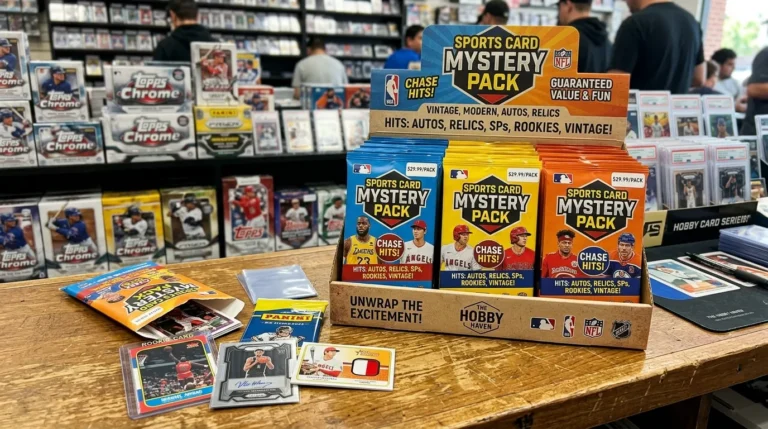
Baseball Mystery Packs: The Exciting Hunt for Rare Cards

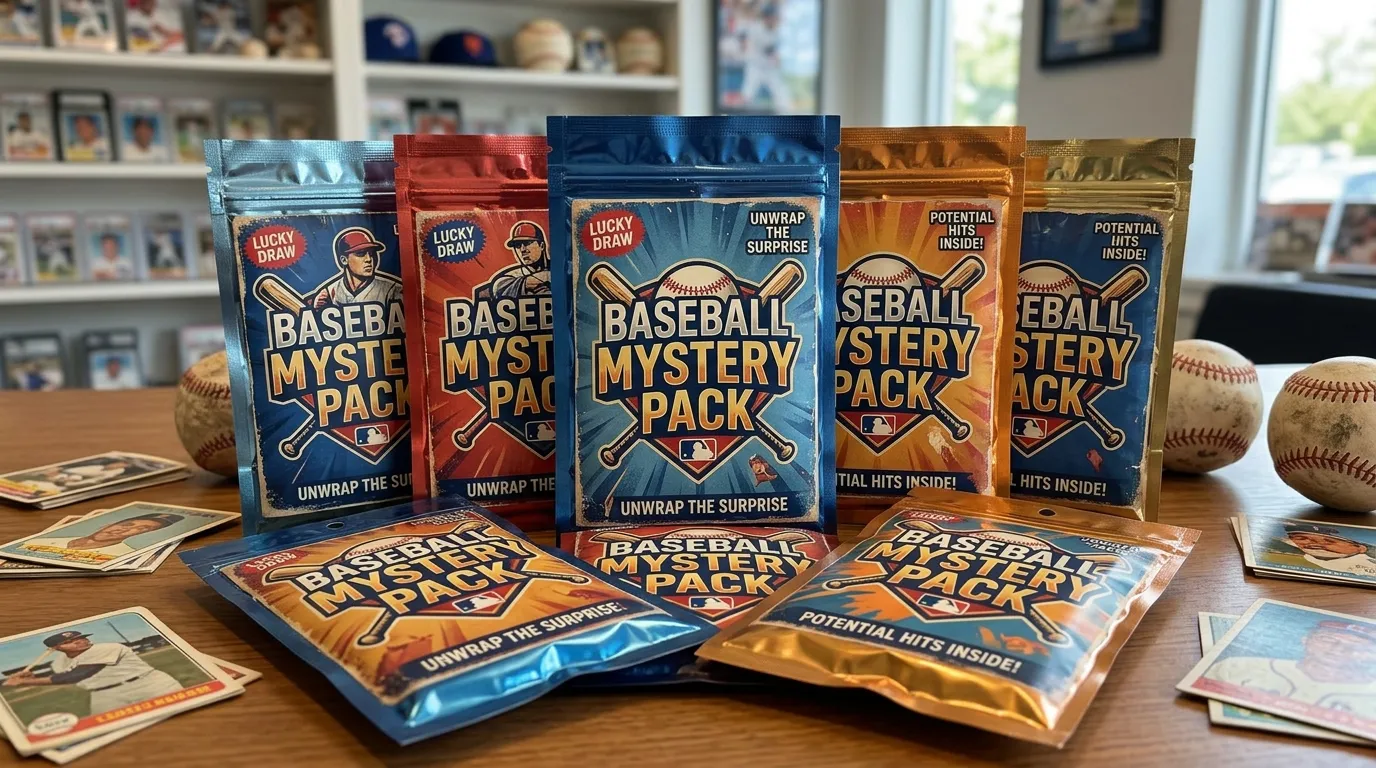
Baseball mystery packs give collectors a different way to buy cards. Instead of seeing the exact card before paying, you buy a sealed pack with a stated range of possible cards. That might include rookie cards, numbered cards, autographs, graded cards, inserts, parallels, or vintage baseball cards. The exact setup depends on the seller. Some packs guarantee a specific type of card, while others focus on a list of possible chase cards.
That unknown is part of the appeal. You have an idea of what could be inside, but you do not know which card you will pull. Still, mystery packs are different from factory-sealed products from companies such as Topps or Bowman. With a regular factory product, the manufacturer determines the contents and publishes the product details and odds. With a mystery pack or repack, the seller puts the product together and sets its own rules.
So, before buying one, it helps to know what you are paying for. A good mystery pack listing should explain the guaranteed card or minimum contents, possible chase cards, pack quantity, card condition, and seller policies. This guide breaks down how baseball mystery packs work, what you can find inside them, how to judge the price, and the mistakes that can turn a fun opening into an expensive disappointment.
What Are Baseball Mystery Packs?
A baseball mystery pack is a sealed package containing baseball cards that you cannot fully identify until you open it. The seller usually gives you some information about the product, but the exact card is randomized.
For example, a seller might advertise a pack with one graded baseball card and several additional cards. Another might promise rookie cards, numbered cards, or a chance at an autograph. Some products focus on one team or group of players. Others mix cards from different seasons and sets.
This makes the product different from buying a single.
When you buy a single card, you know exactly what you are getting. When you buy a mystery pack, you are paying for a chance to receive one item from a defined group.
A mystery pack is also different from a factory-sealed pack. Sports card repacks contain cards that have already been removed from original products and then packaged again by a third party. Fanatics Live describes repacks as custom-made packs containing cards that were previously pulled from factory-sealed packs or sets.
That does not automatically make a repack bad. It simply changes who controls the product.
With factory-sealed cards, you are relying on the manufacturer’s stated product configuration. With mystery packs, you are relying much more on the seller’s description and reputation.
How Do Baseball Mystery Packs Work?
The process is fairly simple.
A seller collects a group of baseball cards and creates a set number of mystery packs. The cards may come from different years, brands, sets, players, and card types.
The seller then decides what each pack will contain.
A product could have:
- One graded baseball card
- Several rookie cards
- Numbered parallels
- Autographs
- Relic cards
- Inserts
- Vintage cards
- Hall of Fame players
- Current MLB stars
- Prospect cards
- A mixture of different card types
The buyer knows the general rules but does not know the exact card before opening the pack.
Some sellers publish a full checklist. This gives buyers a list of cards that can appear across the entire production run. However, a checklist does not mean every buyer receives one of the listed cards. Monmouth Sports Cards, for example, states that its mystery-pack checklists represent cards included in the overall production run, while individual packs remain randomized.
That distinction matters.
If a seller shows a valuable Mike Trout autograph, a rare rookie parallel, and several graded cards on a checklist, those cards may all be possible pulls. That does not mean each pack contains one of them.
The Difference Between a Floor and a Chase Card
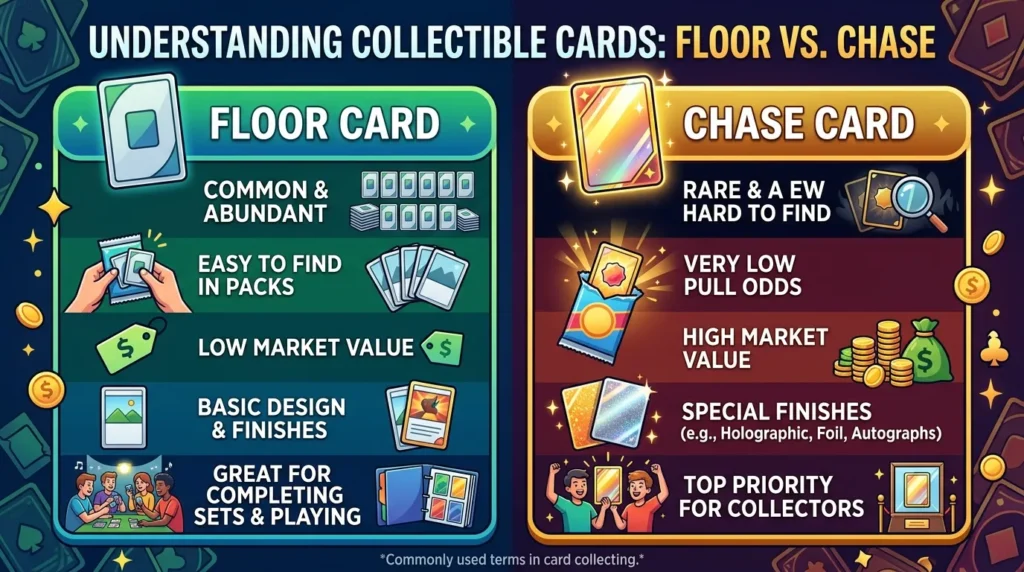
Two terms come up often with mystery packs: floor and chase.
The floor is what you are guaranteed to receive or the minimum standard promised by the seller. The chase is the card or group of cards that buyers hope to pull.
For example, imagine a $50 baseball mystery pack that guarantees one graded card. The graded card is part of the floor. If the seller lists a rare autograph worth several hundred dollars as a possible pull, that autograph is part of the chase.
These are two very different things.
A common mistake is to see the chase card first and forget about the floor. A product may advertise a major rookie autograph, but you should ask what happens if you do not pull it.
A recent collector guide makes the same point: buyers should understand the guaranteed contents before thinking about the highest-value card in the possible pool.
This is one of the easiest ways to judge a mystery pack.
Ask yourself: Would I still be comfortable buying this pack if I missed every major chase card?
If the answer is no, the pack may be too expensive for your budget.
What Cards Can You Find Inside?
There is no single standard list because each seller creates its own product.
Still, several card types appear regularly in baseball mystery packs.
Rookie Cards
Rookie cards are popular because collectors often want cards from a player’s early MLB career. A mystery pack may include current rookies, older rookie cards, or prospects who have not yet established themselves in the majors.
The player matters, but so do the set, card number, condition, parallel, and print run.
Numbered Cards
A numbered card has a stated production limit, such as /99, /50, /25, or /10. A card marked /25 means the particular version has 25 copies in the stated numbered run.
Numbering is one factor collectors use when comparing cards, but a low print number does not automatically make every card highly sought after. The player and specific set still matter.
Autographs
Autographed cards can be another major attraction. These may feature current players, rookies, prospects, former stars, or Hall of Famers.
However, an autograph guarantee does not tell you everything you need to know. You still need to know whose autograph you could receive and what type of card is being included.
Graded Cards
Some mystery packs focus heavily on graded cards. A grading company evaluates the card and places it inside a protective holder with a grade.
The grade matters, but so does the card itself. A high grade on a card with little collector demand does not automatically make the pack a good purchase.
Inserts and Parallels
Inserts are cards included outside the standard base set. Parallels are alternate versions of cards that often use different colors, patterns, finishes, or print quantities.
Modern baseball products can contain many parallel versions. For example, current Topps products can include numbered parallels with very different production levels and pull rates.
Mystery Packs vs. Factory-Sealed Baseball Cards
This is an important comparison for new collectors.
| Feature | Mystery Pack | Factory-Sealed Pack |
|---|---|---|
| Who packages it? | Third-party seller | Card manufacturer |
| Exact card known? | No | No |
| Possible cards listed? | Depends on seller | Manufacturer checklist |
| Odds provided? | Depends on seller | Usually published by manufacturer |
| Product contents controlled by | Seller | Manufacturer |
| Main trust factor | Seller reputation and disclosure | Manufacturer and product information |
| Can it contain older cards? | Often | Depends on product |
| Can it contain graded cards? | Sometimes | Usually not inside standard packs |
The main difference is control.
A mystery-pack seller decides which cards enter the production run. The manufacturer controls a factory-sealed product.
That means the seller’s description becomes much more important with mystery packs. Fanatics Live and other collector resources describe this distinction between manufacturer products and third-party repacks.
How to Check a Baseball Mystery Pack Before Buying
Do not start with the biggest card shown in the product photos.
Start with the product description.
Look for these details:
- What is guaranteed?
- How many cards are included?
- Is a graded card guaranteed?
- What grading company is used?
- Is there a complete checklist?
- How many mystery packs were produced?
- What chase cards are still available?
- Are the cards raw or graded?
- What condition are the cards in?
- What happens if the package arrives damaged?
The seller should make these details easy to find.
A recent guide on sports card mystery packs recommends checking the guarantee, grading information, randomization, hit list, price, shipping details, and store policies before buying.
You should also pay attention to how the seller describes possible cards.
“Possible $500 card inside” is very different from “every pack contains a card worth at least $50.”
The first describes a possibility. The second describes a guarantee.
Why the Checklist Matters
A checklist gives you a better picture of the product.
Suppose a seller makes 50 mystery packs and publishes a checklist containing 50 possible cards. You can see the range of cards in the production run.
Some sellers build small fixed runs. Elemental Breaks, for example, describes repack series with a fixed checklist and series size, allowing buyers to see the cards that belong to that particular run.
A checklist can also help you spot a problem.
Imagine the seller advertises a product with “premium baseball cards” but the published list contains mostly low-demand base cards with one expensive card at the top. That does not necessarily mean the product is dishonest, but it gives you a reason to look more closely at the price.
The checklist is information. Use it.
How to Think About the Price
The price of a baseball mystery pack should make sense even without the biggest chase card.
This is where many buyers get stuck.
A seller may show a $300 card and sell the mystery pack for $40. That can make the product look like an easy bargain. But the $300 card might be one of many possible pulls.
The better question is:
What am I likely to receive, and would I be happy with that result?
You can also compare the exact cards on the checklist with recent sales. Do not rely on a seller’s asking price alone. A card listed online for $200 is not proof that buyers are paying $200 for it.
Card condition matters too.
A raw card with corner damage is different from a clean copy of the same card. A PSA 10 is different from a PSA 8. A numbered parallel is different from the base version.
When checking prices, compare the exact card whenever possible.
Common Mistakes With Baseball Mystery Packs
Buying Because of One Big Card
The biggest chase card is often the first thing people notice.
It should not be the only thing they consider.
Look at the entire possible pool and the guaranteed contents first.
Confusing a Checklist With a Guarantee
A card appearing on a checklist means it belongs to the possible pool. It does not mean your pack contains that card.
This point is easy to miss, especially when a product page uses large photos of expensive cards.
Ignoring the Seller
The seller is a major part of the product.
Look for clear descriptions, previous customer feedback, published checklists, shipping information, and return policies.
Packz notes that the repack market places more responsibility on the buyer to check the seller, possible cards, stated odds, and product information before spending money.
Spending More After a Bad Pull
This is another common trap.
You open one pack and get a card you do not want. Then you buy another because you think the next pack could make up for it.
Set your spending limit before you start.
Mystery packs are supposed to be fun. They should not turn into a race to recover money from the previous purchase.
Are Baseball Mystery Packs Worth It?
That depends on what you want from collecting.
If you want a specific baseball card, buying that card directly is usually more predictable. You know the player, set, card number, condition, and price before paying.
If you enjoy opening packs and do not mind receiving something unexpected, a mystery pack can offer a different kind of collecting experience.
The key is to treat the purchase as entertainment and collecting, rather than assuming you will make money.
Some mystery packs may contain cards worth more than the purchase price. Others will not. There is no guarantee that a chase card will appear unless the seller specifically guarantees it.
That is why the product structure matters more than flashy advertising.
Questions to Ask Before Buying
If the listing does not answer these questions, contact the seller before paying.
What is guaranteed in every pack?
You should know the minimum contents.
How many packs are in the production run?
A fixed number makes it easier to understand the checklist and possible distribution.
Is there a complete checklist?
A full list gives you more information than a few promotional photos.
Are the chase cards still available?
This matters if the product has been on sale for a while.
What condition are the cards in?
Ask whether they are raw, graded, or a mixture.
What grading company is used?
If a graded card is guaranteed, this should be clear.
What is the return policy?
Read the terms before ordering, especially for higher-priced products.
Baseball Mystery Pack Buying Checklist
Before you click buy, run through this short list:
- Read the complete product description.
- Find the guaranteed contents.
- Review the possible-card checklist.
- Check how many packs were made.
- Look for stated odds if the seller provides them.
- Research the seller and customer reviews.
- Check whether cards are raw or graded.
- Compare the exact cards with recent sales.
- Check shipping and return policies.
- Decide your budget before opening a pack.
- Do not assume the biggest card shown is still available.
- Treat the chase card as a possibility unless it is guaranteed.
Final Thoughts
Baseball mystery packs can make card collecting more unpredictable, but the product itself should still be easy to understand before you buy it. The mystery should be about which card you receive, not about what the seller promises.
Start with the guarantee. Then check the checklist, chase cards, production size, card condition, price, and seller history. A clear listing gives you enough information to decide whether the pack fits your collection and budget.
Most importantly, do not buy a mystery pack only because one expensive baseball card appears in the advertisement. Look at the whole product. If you are happy with the guaranteed contents and you enjoy the uncertainty of the opening, the purchase makes much more sense.
That approach keeps the fun part where it belongs: opening the pack and seeing which baseball card is waiting inside.